Compare, Shortlist, and Verify
Salt Lake City Luxury Real Estate Guide
Build a buyer-defined comparison across neighborhood, price band, architecture, and property type, then verify the exact property before making an offer.
Define the comparison
Make luxury specific to the buyer and property
A useful Salt Lake City luxury-home search is not one permanent price cutoff or a list of subjective neighborhood rankings. It is a documented comparison of the buyer's preferred locations, current price band, architecture or housing form, property type, condition, timing, financing position, and ownership plan.
Use this guide to compare neighborhoods and prepare property-specific questions. Open the city search below for Salt Lake City homes, then adjust your price range and property type.
Opens Kamee’s RealScout search with the city selected. Adjust price and property type there; verify current availability and the exact property’s location.
Four-dimension framework
Compare location, price band, architecture, and property type
Apply the same buyer-defined fields to every candidate so missing evidence stays visible and unlike properties are not forced into one score.
Comparison 1
Neighborhood and exact location
Compare the buyer-selected location, route, parcel setting, applicable jurisdiction, and nearby features that matter to the decision. Keep the comparison objective and property-specific.
Comparison 2
Buyer-selected price band
Set the price range for the current search instead of treating luxury as one permanent citywide threshold. Keep purchase price separate from financing, taxes, insurance, association charges, planned work, and reserves.
Comparison 3
Architecture or housing form
Record the claimed style, construction period, alterations, historic status, condition, and supporting records. Verify the exact property instead of extending one neighborhood description across the city.
Comparison 4
Property type and ownership plan
Separate detached homes, condominiums, townhomes, and other ownership forms. Identify every applicable association, the intended use, private and common elements, and unresolved document questions.
Existing area owners
Continue with the dedicated Salt Lake City area pages
These links are comparison starting points, not rankings. Verify the same buyer-selected fields and exact property records wherever the search continues.
The Avenues
Review Area PageFederal Heights
Review Area PageYalecrest
Review Area PageHarvard-Yale
Review Area PageSugar House
Review Area Page9th & 9th
Review Area PageHolladay
Review Area PageCottonwood Heights
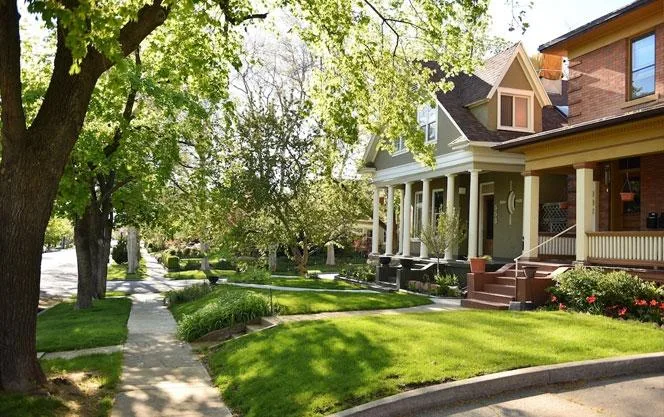
Review Area PageSalt Lake City describes Yalecrest as an East Bench National Register district developed through subdivisions platted from 1910 to 1938, with many period-revival cottages in English Tudor and English Cottage styles plus bungalows. That supports Yalecrest context only. Confirm the style, designation, alterations, and condition of the exact address through current records and qualified review.
Broader Utah area guides
Compare other established area guides
Use these guides to continue a location comparison across the southern Salt Lake Valley and northern Utah County.
Dated market context
Keep citywide figures separate from the luxury decision
For the three months ending June 2026, Redfin reported a Salt Lake City all-home-types median sale price of $608,669. Its June 2026 series reported 642 sales and a 29-day median time on market.
These are dated, citywide, all-home-type figures calculated from MLS and public-record data. They are not luxury-only inventory, a neighborhood price band, an appraisal, a forecast, or a conclusion about a specific property. Refresh or remove them when the stated period is no longer useful.
Review the dated Salt Lake City market sourceCurrent search handoff
Move from a static comparison to exact properties
Open the existing home-search experience after defining location, price range, architecture or housing form, and property type. Bring the exact listing ID or property URL back to the same comparison and diligence file.
In Home Search, enter Salt Lake City and select the matching location before reviewing properties. Office Listings shows the brokerage’s wider inventory and is not a Salt Lake City boundary filter. Confirm the exact address, current listing status, and jurisdiction for each property.
Opens Kamee’s RealScout search with the city selected. Adjust price and property type there; verify current availability and the exact property’s location.
Property shortlist fields
Carry the same facts into every showing decision
- Exact address, listing ID or property URL, and source date
- Buyer-selected location, price band, property type, and timing
- Claimed architecture, housing form, ownership structure, and intended use
- Financing position, monthly obligations, planned work, and reserve questions
- Open zoning, permit, title, association, condition, hazard, insurance, and tax questions
Property-specific diligence
Verify the address, documents, condition, and ownership plan
A listing label, map result, assessor field, empty search result, or neighborhood description does not resolve legal use, historic status, property condition, association obligations, hazards, insurance, taxes, or title.
Jurisdiction, zoning, permits, and historic status
Confirm that the address is inside the controlling jurisdiction. Review the current zoning map, allowed-use guidance, permit or application records, and any local or National Register designation before drawing a conclusion about use or alterations.
Parcel, title, survey, and tax records
Match the exact address and parcel number across county records, the current title file, survey when applicable, and tax sources. Treat assessor and tax portals as starting points, not substitutes for title, appraisal, legal, or tax advice.
Association and ownership documents
Identify every master and sub-association that may apply. Request current governing documents, boundaries, dues, assessments, budgets, reserves, insurance information, litigation disclosures, rules, and use restrictions.
Condition, radon, geologic, flood, and insurance review
Use qualified inspection and property-specific testing. Check current official hazard and flood resources for the exact address, then obtain current lender and insurance review without inferring a property result from regional geography.
Offer, financing, appraisal, and deadlines
Use the current transaction forms and the actual lender, appraisal, disclosure, possession, contingency, inspection, and closing files. Keep every outcome open until the responsible documents and professionals resolve it.
Official verification routes
These exact source links support the static guidance above. They do not replace the current records, transaction documents, testing, quotes, or professional review for a property.
- Salt Lake City zoning lookup map
- Salt Lake City zoning guidance
- Salt Lake City planning FAQ
- Yalecrest historic-district context
- Salt Lake County assessor and parcel search
- Salt Lake County property and tax resources
- Utah Property Characteristics Portal
- Utah Home Buyer Checklist, April 2026
- Utah HOA homebuyer guidance
- Utah state-approved real-estate forms
- Utah radon transaction guidance
- Utah property-tax guidance
- Utah geologic-hazard resources
- FEMA Flood Map Service Center
- HUD Fair Housing Act overview
Objective questions
Salt Lake City luxury-home comparison FAQ
- Does this page show current Salt Lake City luxury listings?
- No. This is a static comparison and diligence page. Use the linked home-search route or ask Kamee for a current property-specific shortlist before relying on price, status, availability, source, or other listing details.
- What price defines a Salt Lake City luxury home?
- This page does not impose a universal numeric threshold. Start with the buyer's current price range, preferred locations, architecture or housing form, property type, condition, and ownership priorities, then compare the exact properties that fit those criteria.
- How should buyers compare Salt Lake City neighborhoods?
- Use objective buyer-selected criteria such as location, route, housing form, architecture supported by records, parcel setting, price range, property type, and ownership obligations. Do not use protected-class proxies, safety rankings, school-quality claims, or subjective best-neighborhood labels.
- How can a buyer verify architectural or historic claims?
- Start with the exact address, the city's historic-preservation and planning records, permit history, title and disclosure documents, and a qualified inspection. Yalecrest has city-documented period-revival cottage and bungalow context, but that does not establish the style, condition, or designation of every property.
- What should a buyer review for an HOA property?
- Identify all applicable associations and the boundaries between private, common, and limited-common property. Request the current governing documents, dues and assessments, budgets, reserves, insurance information, litigation disclosures, rules, and use restrictions before the applicable deadline.
Property-specific next step
Build the Salt Lake City shortlist, showing, and diligence plan
Share the locations, price band, architecture or housing form, property type, timing, financing position, intended use, exact property links, and unresolved ownership questions.
Tell Kamee the locations, price band, architecture or housing form, property type, timing, financing position, and ownership priorities you want to compare; request a curated shortlist, showing plan, and property-specific diligence checklist.No promise is made about current inventory, access, response time, representation, availability, price, financing, appraisal, inspection, negotiation, investment return, or closing outcome.