Salt Lake Valley
Period Revival Streets Between the University of Utah and 9th & 9th
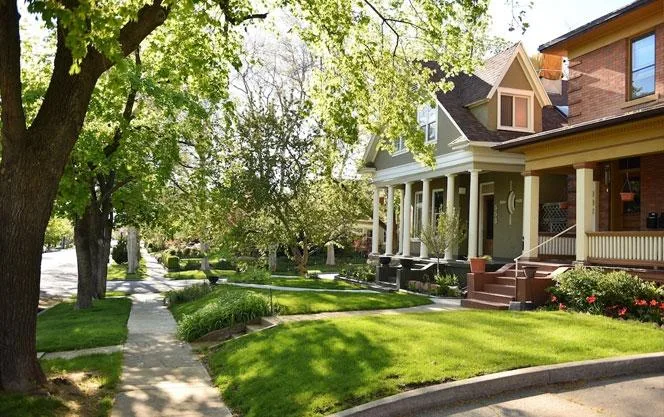
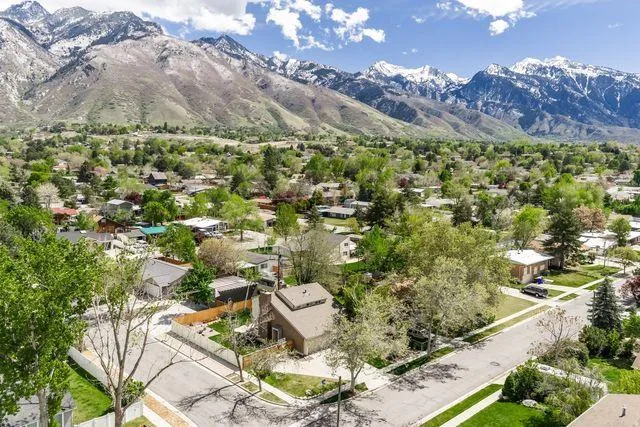
Request a TourHarvard-Yale occupies the section of Salt Lake City’s East Bench where the Ivy-named streets — Harvard Avenue and Yale Avenue — run between roughly 1300 East and 1900 East within the larger Yalecrest National Historic District (NRHP-listed in 2007). The micro-neighborhood combines the period-revival architecture of the broader Yalecrest fabric with a position that places residents roughly ten minutes on foot from the University of Utah to the northeast and within easy walking distance of the 9th & 9th commercial district to the southwest. Most homes were built between 1910 and 1940, with English Tudor, French Norman, Colonial Revival, Spanish Colonial Revival, and Craftsman-influenced examples on compact East Bench lots. The result is a residential setting where mature street trees, ravine green space along Red Butte Creek, and walkable institutions converge in a small geographic footprint.
Why Kamee
Harvard-Yale’s structural advantage is geographic. The Ivy-named streets sit inside the Yalecrest National Historic District (listed on the National Register in 2007 and protected at the local level by Salt Lake City’s Historic Preservation overlay), which means exterior modifications are reviewed by the city’s Historic Landmark Commission and the period-revival streetscape is protected against tear-downs and dimensional incompatibility. That regulatory floor is what preserves the visual cohesion buyers come for.
Layered on top of that protection is access. Residents can reach the University of Utah campus on foot in roughly ten minutes via Sunnyside Avenue or 1300 South, and the 9th & 9th commercial district — Coffee Garden, Tower Theatre, independent restaurants and boutiques — within a comparable walk to the southwest. Few Salt Lake neighborhoods give a buyer Yalecrest-grade architecture, an R1 university campus, and a walkable independent commercial node inside a single car-optional radius.
The third leg of the stool is institutional demand. The University of Utah’s Health Sciences campus is one of the Mountain West’s largest employers, and Rowland Hall — the independent K-12 school whose Lincoln Street upper campus sits a short drive west — pulls families willing to commit to a multi-year educational arc. As of 2026, that mix of preservation, walkability, and anchor institutions is what supports a median listing near $1.45M against a Salt Lake City citywide median that remains materially lower.

Lifestyle

The 9th & 9th intersection (900 South & 900 East), reached on foot from the western edge of Harvard-Yale, anchors an independent commercial node: Coffee Garden, the Tower Theatre (Salt Lake’s art-house cinema), and a rotating set of owner-operated restaurants and specialty shops. North of the neighborhood, 15th & 15th and the University of Utah’s campus dining add a second cluster, giving residents two walkable commercial poles instead of one.

Miller Bird Refuge and Nature Park — roughly 8.75 acres along the Red Butte Creek ravine at 1710 E 900 South — was donated by Maggie Miller in 1935 and still carries its WPA-era stone bridges and retaining walls. Sunnyside Park sits at the north edge near 1700 East, and the Bonneville Shoreline Trail and Red Butte Garden are a short drive uphill. Liberty Park’s 80 acres are accessible to the southwest.

The University of Utah’s main campus and Health Sciences complex (including University Hospital, Huntsman Cancer Institute, and the John A. Moran Eye Center) sit a roughly ten-minute walk to the northeast. That single fact drives a meaningful share of resident demand: physicians, researchers, faculty, and graduate students who want to live near campus without giving up a single-family home on a tree-lined street.

University-affiliated cultural venues — Pioneer Theatre Company, the Utah Museum of Fine Arts (UMFA), and Kingsbury Hall — are inside the same walking radius. The Yalecrest neighborhood council, the Keep Yalecrest preservation group, and active block-level associations give the district a civic infrastructure that is unusually engaged on planning and design-review issues.
Inside the Community
Harvard-Yale’s housing stock is part of the Yalecrest National Historic District, which the National Park Service listed on the National Register of Historic Places in 2007. The district runs roughly from Sunnyside Avenue south to 1300 South and from 1300 East east to 1900 East, with the Ivy-named streets — Harvard, Yale, Princeton, Laird, Hubbard, Gilmer — platted across that grid. The district was found locally significant both architecturally and for its association with the residential build-out of the East Bench in the first half of the twentieth century.
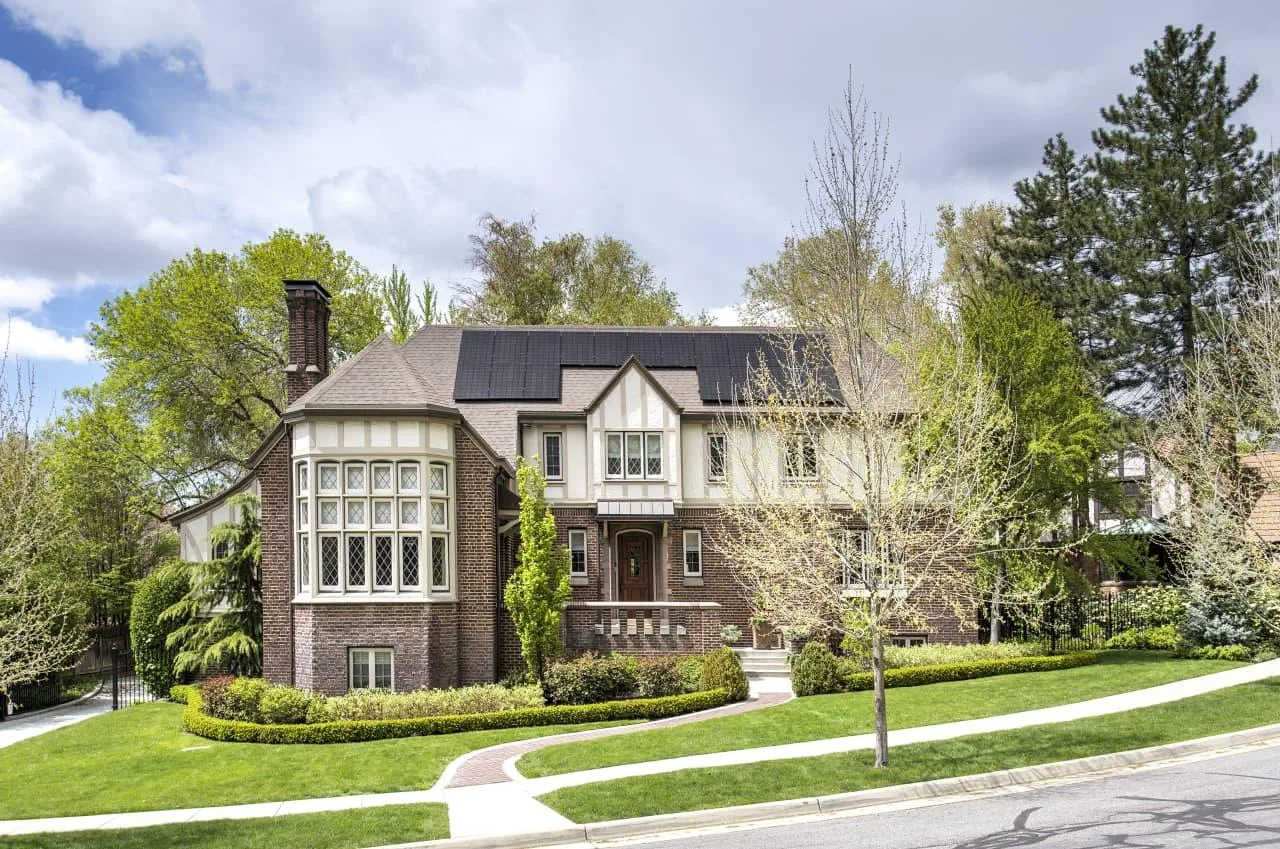
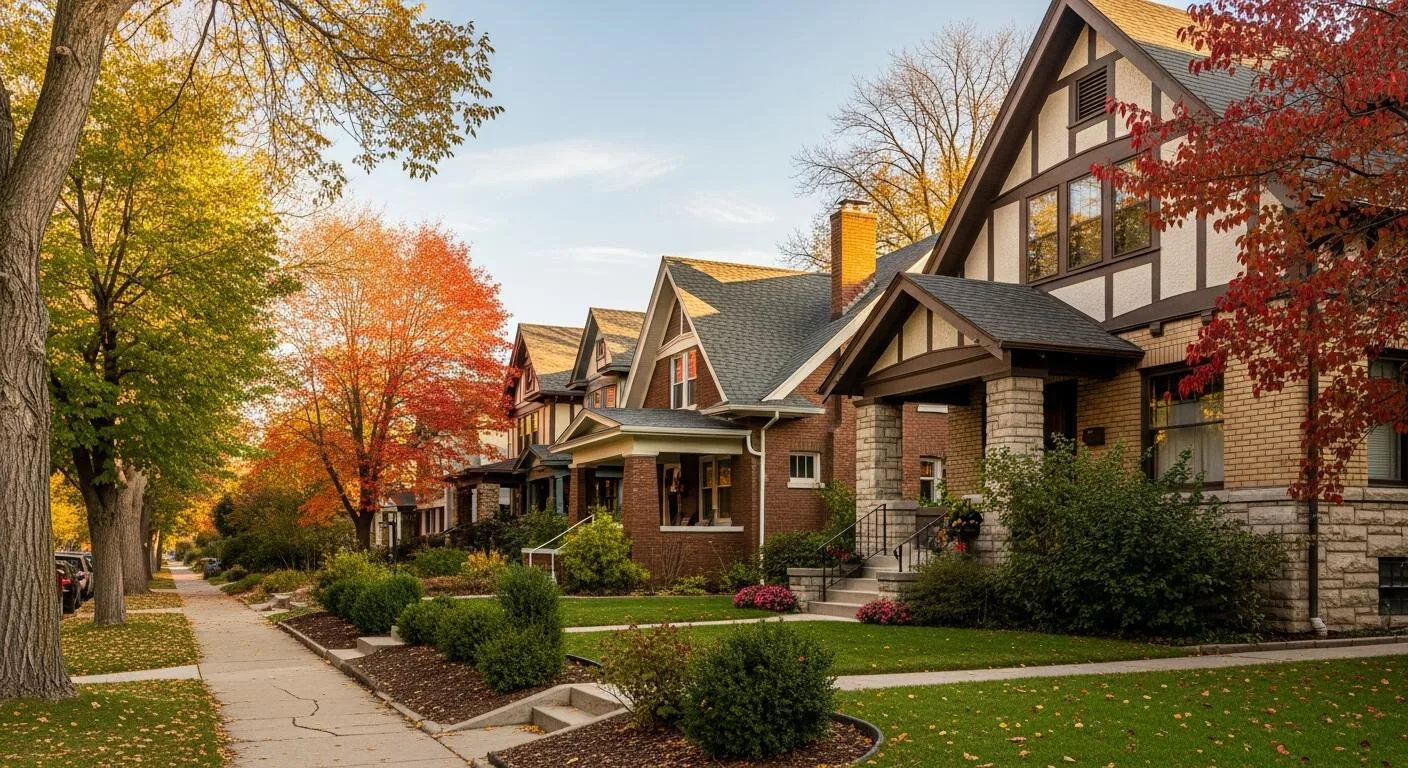
Most homes date to 1910–1940 and read as a deliberate portfolio of period-revival idioms: English Tudor with steeply pitched gables and clinker-brick chimneys, French Norman with conical entry turrets, Colonial Revival with symmetrical facades and dormered roofs, Spanish Colonial Revival with stucco and arched porches, and Craftsman-influenced bungalows. Lots in the Harvard-Yale section are generally compact (about 0.11–0.18 acres) compared with adjoining parts of Yalecrest, but the architectural detailing — leaded windows, original millwork, slate or tile roofs — reads at the same level of quality.
Few Salt Lake City residential pockets place two distinct anchors within the same walkable radius. Harvard-Yale is one of them. From the eastern edge of the neighborhood, the University of Utah’s campus is reachable on foot in roughly ten minutes via Sunnyside Avenue, putting the Marriott Library, the Olpin Union, the U Health complex, and the campus TRAX line stations inside a normal pre-coffee walk. From the western edge, the 9th & 9th commercial intersection at 900 South and 900 East sits at a similar distance, anchoring an independent retail and dining cluster that includes Coffee Garden and the Tower Theatre. A second commercial node at 15th & 15th sits closer still. The practical effect is that a Harvard-Yale resident can plausibly walk to work at the university, walk to dinner at 9th & 9th, and walk to a neighborhood park in between — three trips most Salt Lake neighborhoods would force into a car. As of 2026, that car-optional lifestyle is what the listing price increasingly buys.
This dual orientation also explains the buyer mix. University faculty, medical staff, researchers, and graduate students cluster on the eastern side of Harvard-Yale for the campus commute. Families and professional couples drawn to 9th & 9th’s independent commercial character cluster toward the west. Both populations compete for the same constrained inventory, which is part of why per-square-foot pricing has stayed elevated even when broader Salt Lake County volume has softened.
Red Butte Creek descends from the Wasatch foothills, crosses the University of Utah’s research property, and runs through Harvard-Yale in a shallow ravine that has been protected since the 1930s. Lee Charles Miller Park and Bird Refuge, donated by Maggie Miller to the city in 1935, occupies roughly 8.75 acres of that ravine at 1710 E 900 South. The park’s stone bridges and retaining walls are WPA-era infrastructure and are still in use; a Salt Lake City Public Lands capital-improvement program has been updating the trail network and habitat plantings in the mid-2020s.
Sunnyside Park sits at the north edge of the neighborhood, and the broader East Bench trail system — Bonneville Shoreline Trail, Red Butte Garden, and the foothills above Research Park — is accessible within a short drive. The combination of an embedded ravine corridor, a foothill trail system minutes uphill, and Liberty Park’s 80 acres to the southwest gives Harvard-Yale an outdoor amenity stack that compensates for the relatively compact lot sizes.
Public-school students in Harvard-Yale fall inside Salt Lake City School District boundaries, with most addresses zoned to elementary schools on the East Bench feeding into East High School. The more consequential education story for Harvard-Yale’s pricing, however, is private. Rowland Hall, an independent K-12 school founded in 1867, operates two campuses west of the neighborhood: the McCarthey Campus (Beginning School and Lower School) and the Lincoln Street Campus at 843 Lincoln Street (Middle and Upper School). The Lincoln Street campus is a short drive from Harvard-Yale, which is one reason families committing to a Rowland Hall K-12 arc gravitate to this part of the East Bench.
A multi-year private-school commitment functions as a soft transaction-cost lock-in: families who choose Rowland Hall for a kindergartener are typically signing up for a thirteen-year geographic relationship, which dampens neighborhood turnover and supports listing absorption even in slower market periods.
Per 2025–2026 Salt Lake MLS observation, Harvard-Yale’s median listing has tracked in the $1.4M–$1.5M range, with per-square-foot pricing near $500. The broader Yalecrest core to the east — where lot sizes widen toward 0.20 acres and home footprints scale up — trades at a higher median (roughly $1.7M–$1.8M) but at a comparable or slightly lower per-square-foot figure. In other words, the discount to Yalecrest core is largely a discount on lot size and finished area, not on architectural quality or district protection.
For buyers, that pricing structure creates a defensible entry point into the Yalecrest historic envelope. For sellers, it concentrates demand from two distinct pools — university-adjacent professionals and 9th & 9th-oriented buyers — around a constrained supply of period-revival inventory.
At a Glance
| Factor | Harvard-Yale | Yalecrest Core | Federal Heights | 9th & 9th | The Avenues |
|---|---|---|---|---|---|
| Median Listing (2026) | ~$1.45M | ~$1.79M | $1.0M–$3.5M+ | $650K–$900K | ~$970K |
| Avg Price / Sq Ft | ~$500 | ~$490 | ~$520+ | ~$450 | ~$460 |
| U of U Access | ~10 min walk | ~15 min walk/drive | ~5–10 min walk | ~15 min bike | ~15–20 min drive |
| Typical Lot Size | 0.11–0.18 ac | 0.12–0.20 ac | 0.20–0.50+ ac | 0.07–0.15 ac | 0.10–0.20 ac |
| Architectural Era | 1910–1940 period revival | 1910–1940 period revival | 1910–1960 mixed estates | Pre-1940 Craftsman/Tudor | 1880–1930 Victorian/Bungalow |
| Historic Protection | NRHP Yalecrest (2007) | NRHP Yalecrest (2007) | Partial local overlays | Adjacent to Yalecrest | Local Avenues districts |
Long-Term Outlook
As of 2026, Harvard-Yale’s median listing has tracked in the $1.4M–$1.5M range with per-square-foot pricing near $500 (Salt Lake MLS, 2025–2026). That positioning sits beneath Yalecrest core medians of roughly $1.7M–$1.8M while sharing the same NRHP designation and Salt Lake City Historic Preservation overlay — meaning a buyer is acquiring the same regulatory protection on a smaller lot and (usually) a smaller home footprint.
The architectural protection itself is a structural underwriting input. Yalecrest’s National Register listing was finalized in 2007, and Salt Lake City’s local Historic Landmark Commission reviews exterior alterations. That regime makes tear-down redevelopment economically and procedurally difficult, which is part of why the district’s visual cohesion has held since the build-out concluded in 1940. Buyers underwriting Harvard-Yale homes are effectively buying a constrained-supply asset where the constraint is enforced by both federal designation and local overlay.
On the demand side, two largely uncorrelated buyer pools compete for inventory: University of Utah-affiliated professionals (faculty, physicians, researchers, graduate students) and 9th & 9th-oriented buyers drawn to walkable independent retail. Layered on top is the Rowland Hall demand stream — families on a multi-year private-school commitment — which tends to reduce turnover and lengthen hold periods. That diversification, more than any single price metric, is the durable investment thesis.
Schools & Future
Rowland Hall — founded in 1867 and one of the oldest independent schools in the Intermountain West — operates its Middle and Upper School at 843 Lincoln Street, a short drive west of Harvard-Yale, and its Lower and Beginning School at the McCarthey Campus on Guardsman Way. The school’s K-12 structure functions as a demand driver for Harvard-Yale because families committing in kindergarten typically anchor themselves geographically for the duration of the program.
Public-school students in Harvard-Yale are served by the Salt Lake City School District, with the East High School attendance area and East Bench elementary feeder schools being the relevant zones for most addresses (parents should verify current boundary assignments with the district, as zones can shift). East High is the comprehensive public option and has produced a long line of college-bound graduates.
The University of Utah’s ongoing investment in its Health Sciences campus — including continued expansion at Huntsman Cancer Institute and the Spencer Fox Eccles School of Medicine — is expected to deepen the pool of medical-professional buyers seeking walkable access to campus through the late 2020s. Harvard-Yale’s position roughly ten minutes on foot from the western campus edge makes it a direct beneficiary of that institutional growth.
Frequently Asked
Personalized solutions that bring my clients closer to their dreams and enhance their long-term wealth.
Let's Connect