The Avenues — Salt Lake Valley neighborhood

Salt Lake Valley

The Avenues

Salt Lake City's Enduring Legacy of Urban Prestige

Request a Tour

The Avenues: Salt Lake City's Enduring Legacy of Urban Prestige

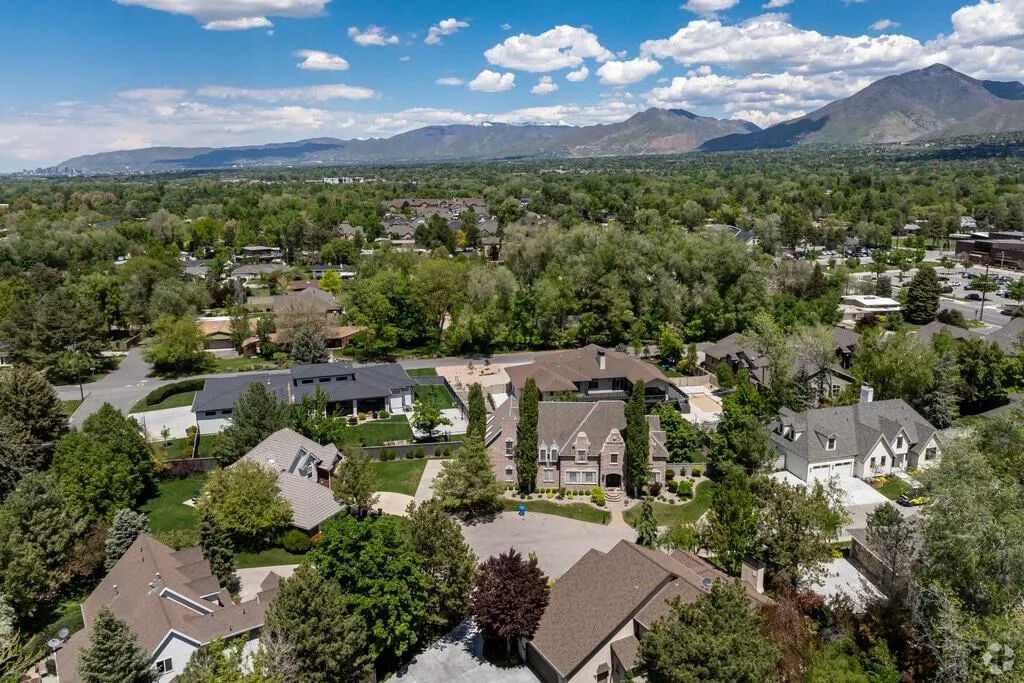
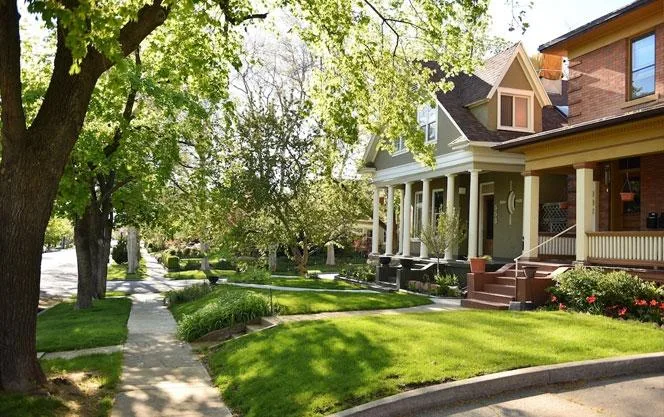
The Avenues is one of Salt Lake City's oldest and most storied residential neighborhoods, a roughly 100-square-block National Register historic district where Victorian Queen Anne mansions, Craftsman bungalows, and Tudor Revival cottages line tree-canopied streets that climb the foothills north of South Temple toward Capitol Hill. Platted on an alphabet-and-number grid (A Street through U Street, intersected by 1st Avenue through about 14th Avenue) and built out primarily between 1880 and 1930, the neighborhood has held its architectural integrity for more than a century while evolving into one of the city's most progressive urban-living destinations. The Lower Avenues offer walkable access to downtown Salt Lake City, the Utah State Capitol, and the TRAX light rail system, while the Upper Avenues open directly into City Creek Canyon — a protected watershed that doubles as the region's most accessible urban nature corridor.

~$970K (Nov 2025)
Median Sale Price
~$418 (Nov 2025)
Price Per Sq Ft
~60 days
Avg Days on Market
~100 sq blocks
Historic District
August 27, 1980
NRHP Listed
84103
ZIP Code

Why Kamee

The Strategic Advantage

The Avenues balances urban proximity and natural immersion in a way few Salt Lake City neighborhoods can match. The Lower Avenues sit within a 10-minute walk of TRAX light rail and the downtown employment core, putting state government, the central business district, the airport line, and the cultural institutions of Temple Square all inside an easy commute. The Upper Avenues, by contrast, open onto City Creek Canyon — a protected municipal watershed that functions as a car-free recreation corridor and effectively gives upper-block residents a private trailhead.

The neighborhood's defining strategic feature, however, is its character as a working historic district. The roughly 100-square-block Avenues Historic District, listed on the National Register on August 27, 1980, encompasses one of the largest concentrations of late-19th and early-20th-century residential architecture in the Intermountain West. That designation, combined with Salt Lake City's Historic Preservation Overlay protections, creates a finite and irreplaceable inventory of pre-1930 housing stock — a structural scarcity that supports long-term value across market cycles.

Compared to Federal Heights, The Avenues offers more architectural diversity and a lower entry point while delivering equivalent walkability to downtown amenities. Compared to Yalecrest, it commands a premium for downtown adjacency and canyon access. Compared to Capitol Hill, it offers a substantially deeper inventory of historic homes. The result is a market that draws professionals, U of U faculty and clinicians, downtown executives, and design-conscious families who want urban convenience without surrendering architectural character.

Kamee Shrope

Lifestyle

Life in The Avenues

Dining & Coffee Culture

Dining & Coffee Culture

The Avenues supports a distinct neighborhood food scene anchored by independent bakeries, bistros, and coffee shops along 3rd Avenue and the L Street / 6th Avenue cluster, with longstanding favorites that function as informal community living rooms. The 10-minute walk down to downtown Salt Lake City's restaurant district — including the State Street corridor and Regent Street dining row — meaningfully expands the daily options without requiring a car.

Outdoors & Recreation

Outdoors & Recreation

City Creek Canyon provides a paved, car-free recreation corridor directly accessible from the Upper Avenues, with the lower paved road open to walkers and cyclists on alternating days and running roughly 3.6 miles up the stream toward the water-treatment plant. Memory Grove sits at the canyon mouth, and the Bonneville Shoreline Trail above the Upper Avenues connects residents to the broader Wasatch foothills network.

Culture & Civic Life

Culture & Civic Life

Proximity to downtown SLC and Capitol Hill puts the Utah State Capitol, the Eccles and Capitol theatres, the Salt Lake City Public Library main branch, and the Temple Square cultural campus within walking distance of the Lower Avenues. The TRAX light rail system connects The Avenues to the University of Utah, the airport, and the broader Salt Lake Valley without the parking friction of a car-dependent suburb.

Community & Civic Engagement

Community & Civic Engagement

The Greater Avenues Community Council is one of Salt Lake City's most active neighborhood organizations, weighing in on zoning, transportation, and historic preservation matters in ways that materially shape the district's evolution. Annual events such as the Avenues Street Fair on 1st Avenue and the holiday Candlelight Walk pull thousands of residents and visitors into the neighborhood and reinforce a strong sense of place.

Inside the Community

Neighborhood Deep Dives

Architectural Heritage & the National Register Designation

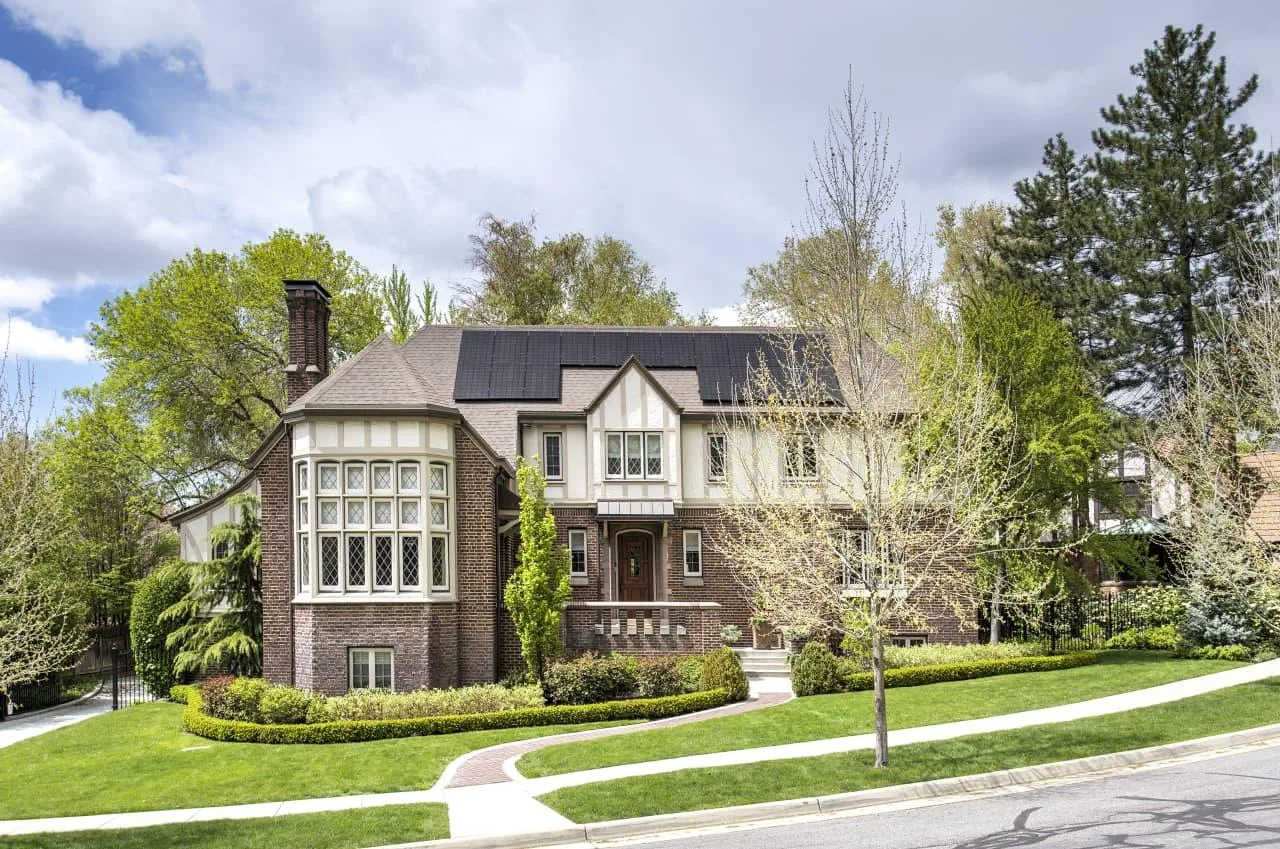
The Avenues' architectural landscape spans the full arc of Salt Lake City's early residential development. Victorian Queen Anne, Eastlake, and Shingle-style homes built in the 1880s through the early 1900s — many architect-designed and two-and-a-half stories — dominate the streets below Fourth Avenue, displaying the turrets, wrap-around porches, decorative shingle work, and stained-glass detailing of the era. Craftsman bungalows of the 1910s and 1920s, with their characteristic low-pitched roofs, exposed rafters, broad eaves, and built-in cabinetry, become the dominant typology above Seventh Avenue. Prairie, Tudor Revival, Mediterranean, Spanish Colonial Revival, and Art Moderne homes from the 1920s through the early 1940s fill in the gaps, creating one of the densest concentrations of pre-war residential architecture in the Intermountain West.

The Avenues Historic District itself is a working preservation framework rather than a label. Listed on the National Register of Historic Places on August 27, 1980, the district covers roughly 100 square blocks of late-19th and early-20th-century residential, commercial, and civic architecture organized on a sloping north-south, east-west grid. Most homes below Fourth Avenue are two-and-a-half-story Victorian-era residences, while bungalows of various stylistic variations predominate above Seventh Avenue. The district's defining character comes not from any single architectural style but from the interplay of hilly terrain, mixed building heights and setbacks, mature street trees, low retaining walls, and iron fencing — landscape elements that, taken together, give the Avenues a coherent visual identity that newer neighborhoods cannot replicate at any price point.

The Vibe: Lower, Middle, and Upper Avenues

The Avenues presents three distinct characters as elevation increases. The Lower Avenues (1st through roughly 4th Avenue) sit closest to downtown and South Temple, with the highest density, the strongest mixed-use commercial nodes, and the most direct walkability to TRAX, the State Capitol, and the central business district. Housing here skews toward the largest and oldest Victorian-era homes, with a meaningful share of multi-family conversions and rentals reflecting proximity to downtown employment.

The Middle Avenues (roughly 5th through 10th) form the residential heart of the district — well-maintained single-family homes on narrow lots, deep tree canopies, and the most active block-level community identity. The Upper Avenues (11th Avenue and above) transition into a more secluded hillside character with somewhat larger lots, dramatic valley views, the City Creek Canyon trailhead at the north end, and a quieter, more owner-occupied profile. The gradient from urban edge to canyon edge within one neighborhood is, by itself, an unusual feature in any American city of comparable size.

Nature: City Creek Canyon & Memory Grove

City Creek Canyon, accessible directly from the Upper Avenues and from Memory Grove at the canyon mouth, is a protected municipal watershed and the most-used urban recreation corridor in Salt Lake City. The lower paved canyon road runs roughly 3.6 miles upstream alongside the creek to the water-treatment plant, with a parallel wooded foot trail covering the first three miles. The canyon's alternating-day access rules — bikes one day, cars the next, walkers always welcome — produce a calm, low-traffic environment unusual for an in-city park.

Memory Grove Park, at the canyon's southern entrance one block below the State Capitol, adds another 0.5-mile off-leash trail (Freedom Trail) and a 2.6-mile Lower City Creek Loop, plus war memorials and landscaped lawns. Staircases connect Memory Grove directly up into the Avenues grid, giving Lower-Avenues residents a foot route from their porch to a true canyon trail in under fifteen minutes — a daily-life amenity that is essentially unmatched elsewhere in Salt Lake City.

Position Within Salt Lake City's Residential Map

The Avenues occupies a geographically and culturally specific slot in Salt Lake City — the historic hillside immediately north of downtown and South Temple, climbing toward Capitol Hill to the west and the U of U medical campus to the east. The neighborhood is bounded roughly by State Street on the west, Virginia Street and Federal Heights on the east, South Temple on the south, and the open foothills above 11th Avenue on the north. ZIP code 84103 covers most of the district.

That location makes it a structurally rare product: a walkable, transit-served, architecturally significant historic district inside one of the fastest-growing metros in the western United States. It is one of the few Salt Lake City neighborhoods where a buyer can choose between a renovated 1895 Queen Anne, a 1924 Craftsman bungalow, or a sensitively designed contemporary infill — all within the same handful of blocks and all served by the same downtown amenities.

At a Glance

The Avenues in Context

FactorThe AvenuesFederal HeightsYalecrestCapitol Hill9th & 9th
Median / Typical Range~$970K (Nov 2025)~$1.9M (Feb 2025)$750K–$1.1M$700K–$1.2M$650K–$950K
Dominant ArchitectureVictorian / Craftsman / Tudor 1880–1940Period Revival 1900–1940Tudor / Colonial 1920–1940Victorian / cottage 1880–1920Bungalow / cottage 1900–1940
Canyon / Trail AccessCity Creek directBonneville Shoreline / Red ButteBus to canyonsCity Creek via Memory GroveLiberty Park / S-Line
WalkabilityHigh (Lower Aves)High to campusModerateHigh to downtownVery high commercial core
Transit10-min walk to TRAXBus to TRAXBus-dependent5-min walk to TRAXS-Line / bus
CharacterHistoric district, eclectic urbanQuiet institutional foothillPreservation residentialCompact historic, civic-adjacentWalkable urban village

Long-Term Outlook

Investment Analysis & Value Retention

The Avenues' investment case is built on a fixed supply of pre-1930 residential architecture inside a walkable urban grid that cannot be reproduced. The National Register designation and the Salt Lake City Historic Preservation Overlay limit demolitions, govern exterior alterations, and effectively cap the inventory of authentic period housing — creating a durable scarcity premium that has held through multiple market cycles.

Recent Redfin data (November 2025) shows a median sale price of approximately $970,000, up 12.8% year over year, with a median price per square foot near $418 and about 42 homes sold in the month. Days on market sit near 60. Above the broader median, renovated estates and turn-key Victorian and Craftsman homes in the Lower and Middle Avenues commonly transact in the $1.5M–$3.5M range, with a few architect-pedigreed properties pushing higher. The spread between unrenovated and fully restored properties supports a thoughtful value-add strategy for buyers willing to engage with historic-district review processes.

Looking forward, two structural tailwinds reinforce the case. First, the University of Utah's ongoing expansion — including Huntsman Cancer Institute build-out and U of U Health's position as the only academic medical center in the Mountain West — continues to deepen the high-income buyer pool within walking and short-driving distance. Second, the 2034 Winter Olympics, awarded to Salt Lake City–Utah, are expected to drive infrastructure investment and international visibility for the city's most identifiable historic neighborhoods, of which The Avenues is among the most photographed.

Schools & Future

Education & Outlook

The Avenues is served by the Salt Lake City School District. Ensign Elementary at 775 East 12th Avenue anchors the upper portion of the neighborhood and is recognized for its academic program, valley views from the 12th Avenue bench, and selection as one of three SLC schools hosting the district's Curriculum & Assessment Lab program. Wasatch Elementary serves a portion of the neighborhood as well, with an arts-integrated curriculum and a long-standing parent community.

Middle and high school assignments roll up into the Salt Lake City School District feeder pattern, with West High School historically serving much of the district. Families seeking private options have several within a short drive, including Rowland Hall (an independent K–12 located just east of the neighborhood) and Judge Memorial Catholic High School, both well-established institutions with strong placement records into selective universities.

The University of Utah, immediately east of the neighborhood, adds an unusual layer of educational and cultural infrastructure for a residential district — including the Marriott Library, the Utah Museum of Fine Arts, the Natural History Museum of Utah, Kingsbury Hall, and Pioneer Theatre Company. For families with college-age children or households tied to academic medicine, the proximity is a meaningful daily-life amenity, not just a commute consideration.

Frequently Asked

Frequently Asked Questions

More to Explore

More Salt Lake Valley Neighborhoods
Work with Kamee for elevated representation

Personalized solutions that bring my clients closer to their dreams and enhance their long-term wealth.

Let's Connect
Contact Me