Sugar House — Salt Lake Valley neighborhood

Salt Lake Valley

Sugar House

Salt Lake City's Urban Village on the S-Line

Request a Tour

Sugar House: Salt Lake City's Urban Village on the S-Line

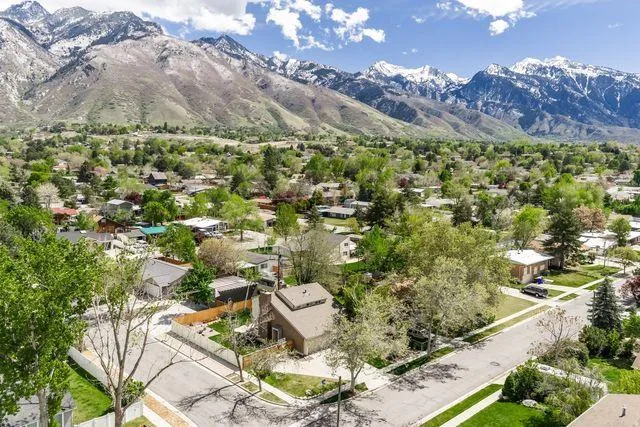
Sugar House is Salt Lake City's mature, mixed-use east-side neighborhood, anchored by the 110-acre Sugar House Park, the 2100 South and Highland Drive commercial corridors, and the S-Line streetcar that runs through its western edge. The fabric blends Craftsman bungalows, brick Tudors, and post-war ranches with a generation of denser urban infill that has accumulated along the streetcar corridor since the early 2010s. Westminster University sits adjacent on a 27-acre campus, Forest Dale Golf Course (1906, the oldest in Utah) borders the park, and the S-Line's quarter-mile extension across Highland Drive — under construction in 2026 with new service targeted for fall 2027 — is reshaping the next chapter of the corridor.

~$650K (early 2026)
Median Sale Price
+2.7% (Feb 2026)
YoY Change
~60 days
Avg Days on Market
110 acres
Sugar House Park
Service ~Fall 2027
S-Line Extension
84106
ZIP Code

Why Kamee

The Strategic Advantage

Sugar House's strategic position rests on three structural advantages that few Salt Lake neighborhoods combine in one footprint. First, transit: the UTA S-Line streetcar runs along the neighborhood's northern edge from 2100 South & 500 East into the Sugarmont core, and the $43.6 million quarter-mile extension to a new Highland Drive & Simpson Avenue station is under construction in 2026 with revenue service targeted for fall 2027 (per UTA and Salt Lake Tribune reporting). Second, accumulated commercial gravity: the 2100 South and Highland Drive corridors hold one of the densest concentrations of independent restaurants, coffee shops, and small-format retail in the Intermountain West.

Third, anchor institutions inside the walking radius. Westminster University's 27-acre Sugar House campus (approximately 1,155 students as of Fall 2024) brings faculty, staff, and graduate-housing demand. Sugar House Park's 110 acres and the adjacent Forest Dale Golf Course — established in 1906 and the oldest course in Utah — anchor a green-space core that almost no infill neighborhood in the West can replicate. Highland High School, the comprehensive 9-12 campus serving the neighborhood, broke ground in April 2026 on a $300 million rebuild scheduled to open around 2030, a generational reinvestment in the school grounds bordering the park.

For a buyer or owner, the practical translation is optionality. The flat street grid, the streetcar, and the dense commercial corridors support genuinely car-optional living, while the housing stock — Craftsman and bungalow blocks on the south side, post-war ranches on the east side, and new mid-rise condominiums and townhomes near Sugarmont — covers a wide price band inside a single ZIP code.

Kamee Shrope

Lifestyle

Life in Sugar House

Dining, Coffee & Independent Retail

Dining, Coffee & Independent Retail

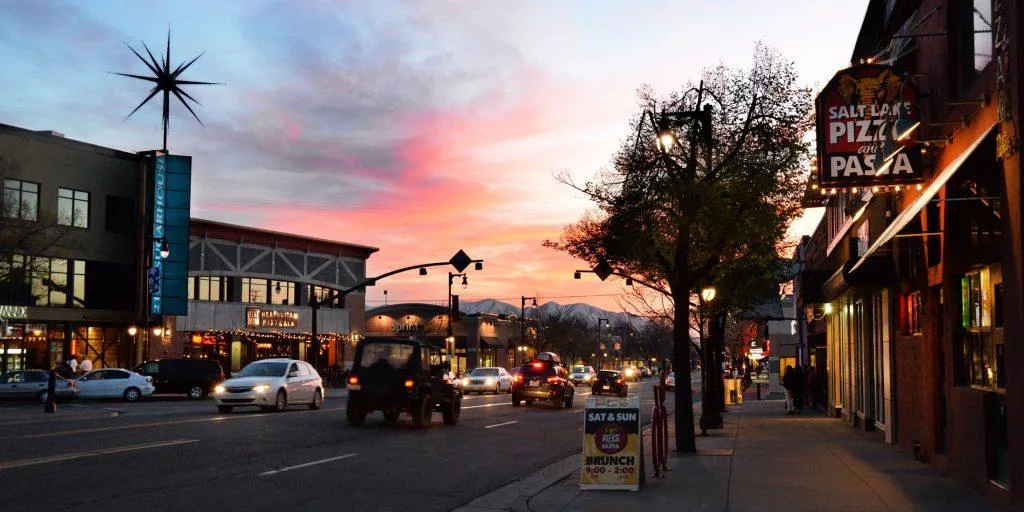
The 2100 South spine and the Highland Drive intersection carry an independent restaurant and coffee cluster that runs from craft breweries near 1100 East to neighborhood diners west of 1300 East. The Sugarmont mixed-use core — built atop the former Granite Furniture site and adjacent redevelopment parcels — adds a denser block of restaurants, a grocery anchor, and ground-floor retail with residential above. Two walkable commercial poles instead of one is the practical effect: Sugarmont/Highland to the west, 1700 East and beyond to the east.

Parks, Trails & Outdoor Recreation

Parks, Trails & Outdoor Recreation

Sugar House Park's 110 acres include a central lake, playing fields, an event pavilion, and the looping perimeter path that draws walkers and runners year-round. Forest Dale Golf Course (1906) borders the park on the south. The S-Line Greenway and the connecting Parley's Trail link the streetcar corridor west toward Liberty Park and east toward the I-80 trail system, giving residents a connected commute-and-recreation network on foot or by bike.

Westminster & Campus Culture

Westminster & Campus Culture

Westminster University's 27-acre campus along 1300 East and 1700 South brings the academic infrastructure normally associated with a larger university town — a student population, faculty housing demand, public lectures, and athletic facilities — directly into the residential fabric. The campus edge is permeable: residents walk through it to reach Emigration Creek and the eastern park access, and Westminster's arts and athletic programming spills out into the neighborhood's civic calendar.

Civic Anchors & Community Events

Civic Anchors & Community Events

The Sugar House Farmers Market, the Fourth of July fireworks at Sugar House Park (one of the larger free public displays in the Salt Lake Valley), the annual Sugar House Arts Festival, and the Sugar House Community Council give the district an unusually active civic infrastructure. The community council weighs in on every major redevelopment proposal along the corridor and is one of the more engaged neighborhood bodies in Salt Lake City.

Inside the Community

Neighborhood Deep Dives

S-Line Streetcar & Transit-Oriented Investment

The S-Line is a two-mile streetcar operated by the Utah Transit Authority that runs from the Central Pointe TRAX station at 2100 South & 200 West east through the Sugar House Greenway to a current terminus near 2100 South & 1100 East. It opened in December 2013 and carries riders into the broader TRAX light-rail network at Central Pointe, connecting Sugar House to downtown Salt Lake City, the airport, and the south valley. UTA broke ground in 2026 on a $43.6 million extension that adds roughly a quarter-mile of track across Highland Drive and ends at a new station near Highland Drive & Simpson Avenue, immediately adjacent to the Sugar House business district. Per UTA and Salt Lake Tribune coverage, revenue service on the extended alignment is targeted for fall 2027.

The practical effect of the extension is that the streetcar will finally reach the densest piece of the Sugar House commercial core rather than terminating one block short of it, which is what the original 2013 alignment did. That changes the walk-shed for both Sugarmont residents and the Highland Drive retail corridor.

Architectural Layers & Housing Stock

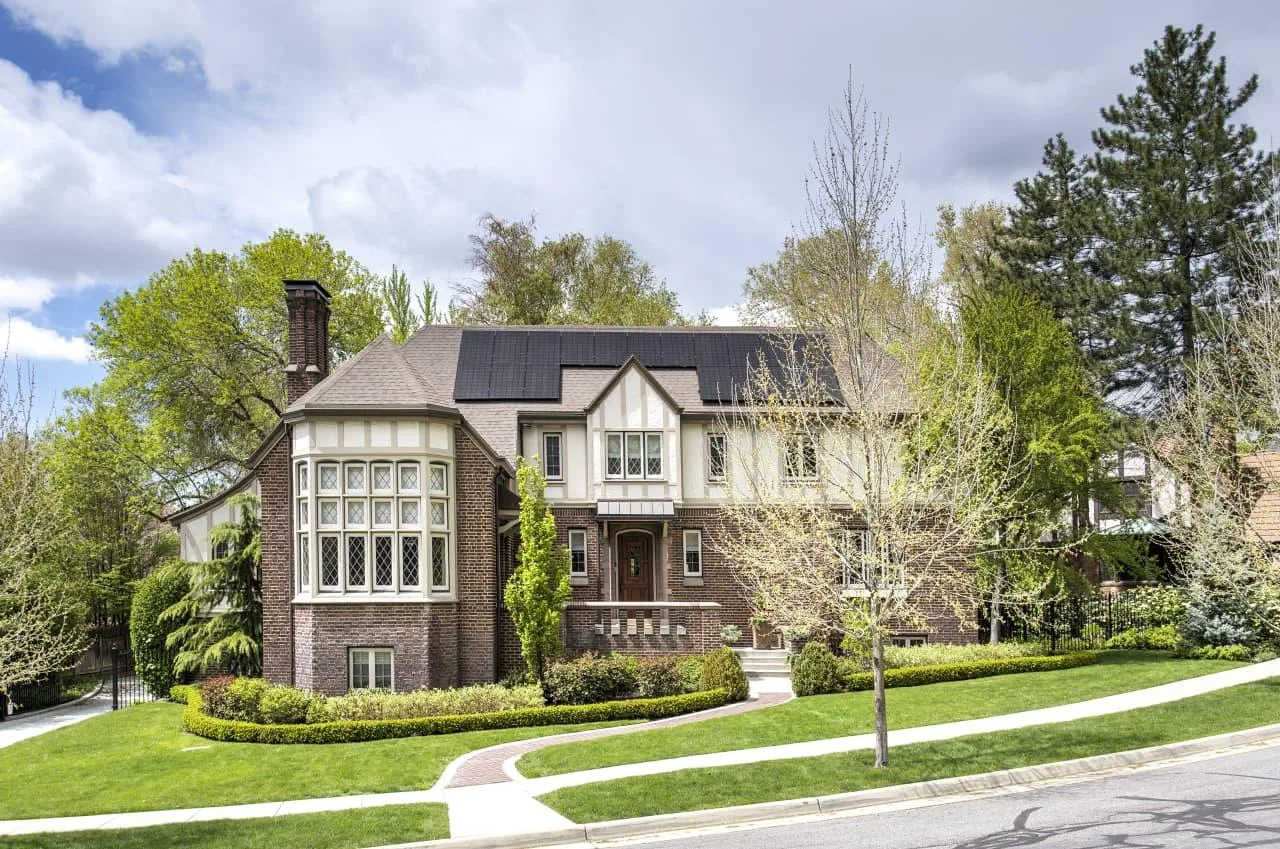
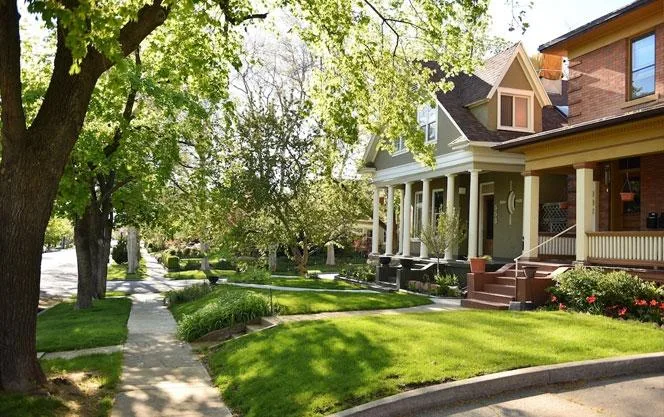
Sugar House's housing stock reads as a timeline of Salt Lake City's twentieth century. The pre-war core south of 2100 South and east of 1300 East holds Craftsman bungalows, brick Tudor Revivals, and a smaller set of period-revival cottages on compact lots with detached garages and mature street trees. Post-war ranches and split-levels fill in the blocks closer to Highland Drive and along the east-side streets toward 2300 East. Beginning in the 2010s, a third layer of contemporary infill — mid-rise condominiums, four-over-one townhome rows, and the Sugarmont and Dixon Place projects — accumulated along the S-Line and at the former Granite Furniture site.

The result is a single ZIP code (84106) that supports a price band running from sub-$500K condos and townhomes near the streetcar to $1.2M+ renovated bungalows and ranches on the southern blocks. For a buyer, the architectural diversity removes the single-style risk that defines a place like Yalecrest; for a long-tenured owner, the infill activity has pulled lot values upward without dismantling the bungalow streets.

Sugar House Park & Forest Dale

Sugar House Park spans 110 acres at the southeast corner of the neighborhood, bounded by 2100 South, 1300 East, and the I-80 frontage. The park sits on land that, until the early 1950s, held the Utah State Prison; the prison was decommissioned and the grounds converted to public open space, an unusual civic story that explains the park's flat, open geometry. The central pond, the looping perimeter path, the Big Field for free-play and events, and the pavilion shelters carry year-round use from neighbors, Highland High athletes, and weekend visitors from across the valley.

Forest Dale Golf Course, immediately south of the park, opened in 1906 and is the oldest golf course in Utah. The City of Salt Lake acquired the course in 1935, and its New Deal-era clubhouse is recognized as a WPA-period civic building. The combined Sugar House Park / Forest Dale footprint gives the neighborhood roughly 200 acres of contiguous green space — a scale that supports the residential premium and the rental absorption rates of the surrounding blocks.

The Sugarmont Redevelopment Arc

The block bounded roughly by 2100 South, Highland Drive, Sugarmont Drive, and 1100 East has carried the heaviest redevelopment load of any single block in Salt Lake City over the past decade. The Granite Furniture Building site, the former Sugar House Commons strip, and adjacent surface parking parcels have been replaced or are being replaced by mid-rise mixed-use buildings with grocery and restaurant uses at the ground floor and rental or for-sale residential above. The Dixon Place, Sugarmont Apartments, and adjacent towers each added hundreds of residential units within a five-minute walk of the streetcar.

That density has cut both ways for the surrounding bungalow streets. On one hand, it has compressed traffic and construction impacts onto a small core area; on the other, it has built the customer base that supports the independent restaurants and shops on Highland Drive and 2100 South. The S-Line extension is the next move in that arc, and it is the move that finally pulls the streetcar terminus into the redeveloped core instead of stranding it one block away.

At a Glance

Sugar House in Context

FactorSugar House9th & 9thThe AvenuesHolladayCottonwood Heights
Median Price (early 2026)~$650K~$750K-$900K~$970K~$900K-$1.1M~$850K-$1.0M
TransitS-Line streetcar + busBus routesTRAX ~10-min walkBus onlyBus only
Walkable Commercial2100 South + Highland Drive900 South & 900 East nodeLimited, mostly residentialHolladay Village coreStrip-format retail
Green SpaceSugar House Park 110ac + Forest Dale GCLiberty Park ~80ac (adjacent)City Creek Canyon accessKnudsen Park, creek corridorsBig Cottonwood Canyon access
Housing StockBungalows, ranches, new infillBungalows + period revivalsEclectic 1880s-1930sMid-century + estatePost-war + newer subdivisions
VibeUrban village, mixed-useCompact indie commercialHistoric residential urbanSuburban villageFoothill suburban

Long-Term Outlook

Investment Analysis & Value Retention

As of early 2026, the Sugar House median sale price sits near $650K with a February 2026 year-over-year change of approximately +2.7% (per Redfin neighborhood data), with average days on market lengthening to roughly 60 days from 36 days a year earlier. The market cooled in pace from the 2021-2023 cycle but held nominal price levels, which is the pattern observable across most established Salt Lake east-side neighborhoods.

The structural thesis is the compounding effect of the S-Line corridor. The quarter-mile extension to Highland Drive & Simpson Avenue, with revenue service targeted for fall 2027, brings the streetcar terminus into the densest part of the Sugar House business district for the first time and is expected to materially change the walk-shed for both the Sugarmont residential blocks and the Highland Drive retail corridor. Transit-proximate inventory — the condo and townhome stock within a quarter mile of an S-Line stop — is the segment most likely to capture an explicit transit premium after the extension opens.

For owner-occupant buyers, the more durable thesis is the supply-side scarcity of the pre-war bungalow streets south of 2100 South. The Sugar House Historic District protections, the small lot geometry, and the absence of available teardown sites mean that the existing bungalow and Tudor stock cannot be meaningfully expanded, while the demand pool — Westminster faculty, downtown professionals on the streetcar, and families routed to Hawthorne Elementary and Highland High — continues to broaden.

Schools & Future

Education & Outlook

Sugar House is served by the Salt Lake City School District. Hawthorne Elementary (K-6), at 1675 S 600 East just west of the neighborhood, enrolls roughly 360 students at a 19:1 student-teacher ratio and is the most commonly routed elementary for the western Sugar House blocks; Dilworth Elementary serves the eastern blocks. Clayton Middle School handles 7-8, and Highland High School at 2166 S 1700 East — bordering Sugar House Park — is the comprehensive 9-12 campus, with roughly 1,883 students and families speaking 29 different languages on campus.

The Salt Lake City School District broke ground in April 2026 on a $300 million rebuild of Highland High School, a 46-to-48-month construction project with the replacement campus projected to open around 2030 (per Salt Lake Tribune coverage). The rebuild is one of the largest single school-district capital projects in Utah and is expected to reshape the southern edge of Sugar House Park and the school's academic footprint for a generation.

For families seeking independent education, Rowland Hall's Lincoln Street upper campus is a short drive northwest, and Westminster University's 27-acre campus inside the neighborhood (approximately 1,155 total students as of Fall 2024) provides undergraduate, graduate, and continuing-education programs in business, nursing, education, and the liberal arts. The combination of a comprehensive public high school under reinvestment, accessible independent options nearby, and a small-comprehensive university inside the walking radius is unusual for a single Salt Lake neighborhood.

Frequently Asked

Frequently Asked Questions

More to Explore

More Salt Lake Valley Neighborhoods
Work with Kamee for elevated representation

Personalized solutions that bring my clients closer to their dreams and enhance their long-term wealth.

Let's Connect
Contact Me