Lifestyle · Salt Lake City
Living in The Avenues
Historic homes on the hillside above downtown, with views, walkability, and direct proximity to the State Capitol and Memory Grove — what daily life is actually like in one of Salt Lake's oldest neighborhoods.
The Avenues is Salt Lake City's original residential hillside neighborhood — laid out in the 1870s on the bench rising north of downtown, with a grid of lettered avenues and named streets, historic Victorian, Tudor, and bungalow homes, and direct walking access to downtown, the State Capitol, City Creek Canyon, and Memory Grove Park.
This guide covers what daily life feels like in The Avenues and what makes the neighborhood so durably desirable. For the broader neighborhood detail page, see The Avenues.
Historic Charm with Strong City Access
Architecture and Streets
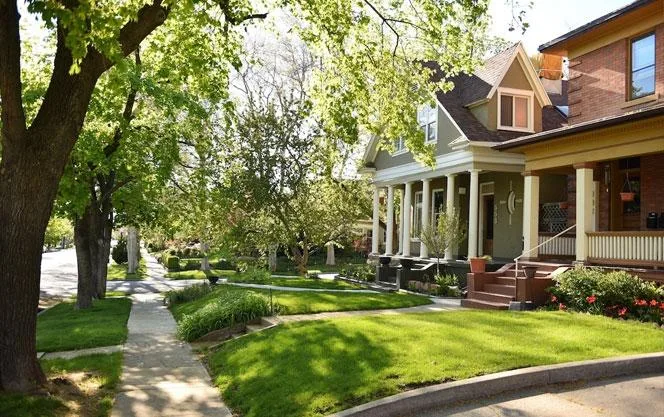
The Avenues' architectural character is one of the strongest in Salt Lake City. Streets from B Street through P Street and from First Avenue through about 11th or 12th Avenue contain a dense mix of late-Victorian, Craftsman, Tudor Revival, Colonial Revival, and Mediterranean-style homes — most dating from the 1880s through the 1930s. Lower Avenues (closer to downtown) tend toward smaller scale and tighter lots; Upper Avenues climb the hillside and contain larger homes with stronger views.
The neighborhood is a designated National Register Historic District, and the City's Avenues Historic District protections shape exterior changes on contributing properties. For buyers, this means architectural character is a long-term value driver — the streets look meaningfully the same decade over decade rather than turning over to new construction.
Views and Location
Upper Avenues homes carry some of the strongest city and valley views in Salt Lake City. North-facing streets look toward the State Capitol, the downtown skyline, and across the Salt Lake Valley to the Oquirrh Mountains. East-facing streets look toward the Wasatch front. The view premium is real but uneven — specific addresses with unobstructed views can carry significant value over neighbors a block or two away.
The Avenues offers downtown, University, and foothill context. Actual walking, cycling, driving, and airport routes vary by address, grade, traffic, weather, and current conditions.
Daily Lifestyle
Daily life in The Avenues blends urban walkability with strong neighborhood identity. Cafes, neighborhood restaurants, a longstanding farmers market on First Avenue, and local groceries (Avenues Market, Liberty Heights Fresh nearby) anchor the daily-services side. City Creek Canyon — a closed-to-traffic canyon road and trail directly accessible from the neighborhood — is a major lifestyle draw for runners, dog walkers, and cyclists.
Memory Grove Park, the State Capitol grounds, and the University of Utah's Health Sciences area are all immediate. The neighborhood draws a meaningful share of physicians, U of U faculty, downtown professionals, and longtime Salt Lake residents who have stayed across decades.
What Buyers Love About The Avenues
The Avenues retains a small set of buyer-defining strengths: original architecture and a protected streetscape, direct downtown access, strong views from Upper Avenues addresses, walkable daily life, City Creek Canyon trail access, and a neighborhood character that has stayed remarkably consistent across decades. These strengths are difficult to replicate elsewhere in the Salt Lake market.
The trade-offs are also worth understanding. Lots are typically smaller than Salt Lake County estate neighborhoods. Many older homes carry deferred-maintenance considerations — foundations, electrical, knob-and-tube, and lead-paint issues are common on properties that have not been comprehensively updated. Parking on some Lower Avenues streets is street-only. These factors are part of buying into the historic character.
Browse The Avenues neighborhood page, explore Capitol Hill, or reach out for a private intake conversation.
Common Questions
Living in The Avenues FAQ
- Is The Avenues a good place to live?
- Yes. The Avenues is consistently considered one of Salt Lake City's most desirable neighborhoods. The combination of historic architecture, walkable proximity to downtown and the State Capitol, strong city and valley views from Upper Avenues addresses, and direct City Creek Canyon trail access is difficult to replicate elsewhere in the city.
- What is the difference between Lower Avenues and Upper Avenues?
- Lower Avenues (roughly First Avenue through Fifth or Sixth Avenue) sits closer to downtown, with smaller-scale homes, tighter lots, and the highest level of walkability to downtown destinations. Upper Avenues (climbing the hillside above Sixth Avenue) contains larger homes, more substantial lots, and the strongest views — but a longer walk to downtown.
- What schools serve The Avenues?
- The Avenues is served by Salt Lake City School District. The neighborhood's elementary is Wasatch Elementary; middle school is Bryant Middle; high school is West High School. Private school options nearby include Rowland Hall (in the lower Avenues area) and the McGillis School.
- Can I walk to downtown from The Avenues?
- The Avenues offers downtown, University, and foothill context. Actual walking, cycling, driving, and airport routes vary by address, grade, traffic, weather, and current conditions.
- What should buyers know about old homes in The Avenues?
- Most homes in The Avenues date from the 1880s through the 1930s. Comprehensive inspections matter — common items to evaluate include foundation condition, electrical (especially knob-and-tube), plumbing, roof age, and lead-paint and asbestos considerations on un-renovated properties. Many of the strongest Avenues homes have been thoughtfully updated while preserving original character; a smaller share remains in original condition and rewards renovation work.
Start with a Conversation
Whether you're buying, selling, or exploring a move to The Avenues, Kamee provides a private, no-pressure conversation about your goals — and a working plan that fits.