Salt Lake City
Capitol Hill Salt Lake City Real Estate
Historic district surrounding the Utah State Capitol — Victorian, Craftsman, and early-twentieth-century homes on walkable streets immediately above downtown.
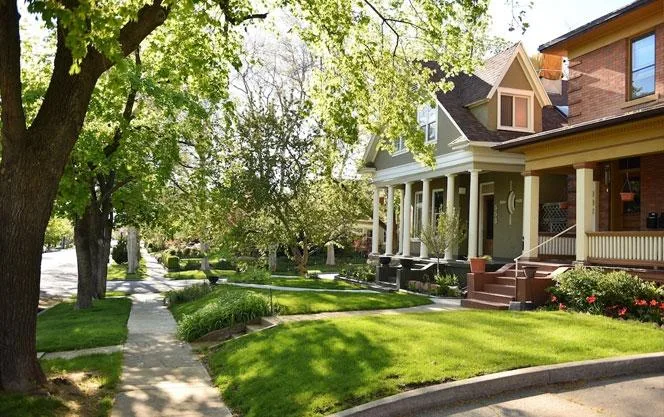
Capitol Hill is the historic Salt Lake City neighborhood that climbs the hillside above downtown, anchored by the Utah State Capitol building at its crown. The neighborhood is one of the oldest residential districts in the city — much of the building stock predates 1920 — and preserves a remarkable concentration of Victorian, Craftsman, Colonial Revival, and early-twentieth-century homes on narrow walkable streets. Capitol Hill sits immediately west of the Avenues and directly above downtown SLC, with Memory Grove and City Creek Canyon defining its eastern boundary.
Kamee Shrope is an Engel & Völkers Private Office advisor and REALM member. Review current profile details at https://www.engelvoelkers.com/private-office/en/advisors/kamee-shrope.
Historic Homes, City Access, and Strong Character
Property Character
Capitol Hill's architectural identity is one of the strongest in the city. The neighborhood preserves Victorian-era cottages and substantial Queen Anne homes from the 1880s and 1890s, Foursquare and Craftsman bungalows from 1900–1920, and a layer of 1920s revival-style homes (Colonial Revival, Tudor Revival, Mediterranean Revival) on the upper hillside streets. Many properties have been carefully restored over the past two decades; others retain original interior detail (millwork, plaster, leaded-glass windows) intact.
Lots are small by modern standards — most pre-1900 properties sit on 25-foot to 40-foot frontages — and many homes climb steep terrain that makes the front-yard footprint smaller than the building footprint. The neighborhood is a National Historic District in significant portions, which affects exterior renovation rules but does not constrain interior work.
Views and Walkability
Capitol Hill has pedestrian connections to downtown SLC amenities and Memory Grove Park on its eastern edge, which opens into City Creek Canyon for trail hiking and bicycle access into the foothills. Walking routes and conditions vary by address, terrain, weather, and destination.
Many upper Capitol Hill addresses have west or south view exposures across downtown SLC, the Great Salt Lake, and the Oquirrh Mountains. The State Capitol is a year-round neighborhood landmark and walking destination.
Pricing Trends
Capitol Hill includes older homes with varied condition, renovation history, terrain, and access. Current value and market behavior require address-specific comparable and condition review.
Inventory turns infrequently. Many Capitol Hill homes are long-held by owners who prioritize the architectural and locational character. Buyers should be prepared to move quickly when the right property surfaces and to work with an advisor who has direct visibility into upcoming listings.
What to Know Before Buying or Selling
For buyers, Capitol Hill rewards diligence on two specific dimensions: structural condition (many pre-1900 homes have foundation, electrical, and seismic considerations that benefit from a thorough inspection) and historic-district overlay rules (significant portions are part of a designated district that constrains exterior alterations). Both are manageable with the right pre-purchase work, but neither should be skipped.
For sellers, preparation and presentation should reflect the home's condition, architecture, and current comparable evidence. Before altering original woodwork, plaster, or period details, assess the property's condition, buyer expectations, and the scope of the proposed work with qualified professionals.
Compare against The Avenues (the adjacent historic district to the east, larger inventory pool, slightly newer building stock on average), or the broader Salt Lake City Real Estate overview. Reach out for a private market conversation about specific Capitol Hill properties.
Common Questions
Capitol Hill Salt Lake City Real Estate FAQ
- What is Capitol Hill in Salt Lake City?
- Capitol Hill is the historic Salt Lake City neighborhood surrounding the Utah State Capitol, climbing the hillside immediately above downtown. It is one of the oldest residential districts in the city, with a high concentration of pre-1920 Victorian, Craftsman, and early-twentieth-century homes. Most of the neighborhood is part of a designated National Historic District.
- How is Capitol Hill different from the Avenues?
- Capitol Hill and the Avenues are adjacent historic SLC districts but functionally different. Capitol Hill is older on average (more pre-1900 inventory), denser, and steeper, with the State Capitol and Memory Grove as anchors. The Avenues are larger overall, with a broader range of housing stock including more 1920s and 1930s homes, and extends further north and east up to Federal Heights. Both are walkable to downtown; Capitol Hill is slightly closer.
- Are there historic-district rules in Capitol Hill?
- Significant portions of Capitol Hill are part of the Capitol Hill National Historic District, which means exterior alterations to contributing properties are subject to design review. Interior renovations are generally not constrained. The exact rules depend on the property's specific status; the Salt Lake City Historic Landmark Commission publishes current guidelines.
- What is the walkability of Capitol Hill?
- Capitol Hill has pedestrian connections to downtown SLC amenities, Memory Grove Park, and City Creek Canyon. Walking routes and conditions vary by address, terrain, weather, and destination.
- How can a buyer evaluate representation?
- Kamee Shrope is an Engel & Völkers Private Office advisor and REALM member. Review current profile details at https://www.engelvoelkers.com/private-office/en/advisors/kamee-shrope.
Start with a Conversation
Whether you're buying, selling, or exploring a move to Capitol Hill Salt Lake City, Kamee provides a private, no-pressure conversation about your goals — and a working plan that fits.