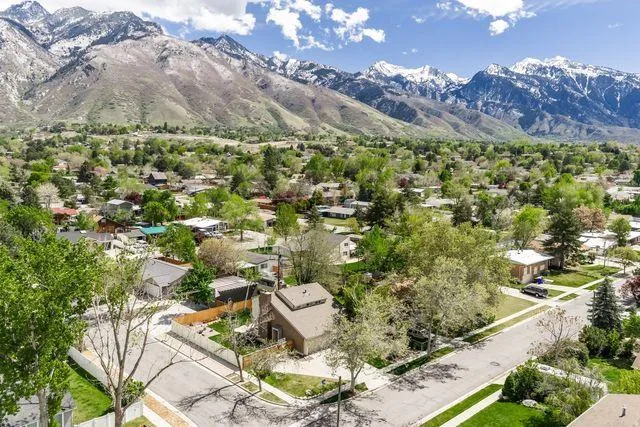
Cottonwood Heights vs. Federal Heights: A Luxury Buyer’s Property-Fit Guide
Cottonwood Heights and Federal Heights can both belong on a Salt Lake luxury buyer’s shortlist, but they solve for different daily patterns. The practical choice is not canyon access versus city access in the abstract. It is whether a specific parcel, house, jurisdiction, and ownership burden fit the way you intend to live.
Kamee Shrope Realty’s Salt Lake City neighborhood guide places Federal Heights among the established central and east-side luxury areas while treating Cottonwood Heights as a canyon-adjacent residential choice. The firm also maintains separate pages for Federal Heights and Cottonwood Heights homes. Those pages are useful orientation. A buying decision still has to be made house by house.
The real decision: canyon-adjacent space or central estate living
Start with the week the property needs to support.
- How often will you drive toward Big or Little Cottonwood Canyon?
- Which work, school, airport, cultural, and family destinations matter most?
- Do you want a foothill setting, a larger site, or an established central neighborhood pattern?
- How much exterior maintenance, snow management, slope, drainage, and landscape responsibility are you prepared to carry?
- Is renovation part of the plan?
- Do you need certainty about stairs, accessibility, storage, parking, or multigenerational use?
These questions should eliminate weak fits before a buyer starts defending a neighborhood preference. Neither name guarantees one housing type, one commute, or one ownership experience.
Cottonwood Heights: verify the parcel behind the canyon lifestyle
Cottonwood Heights is its own municipality. That means its planning, zoning, permit, mapping, and fee resources are the correct starting points for properties inside city limits.
The city publishes community maps, adopted and special plans, and information about its current General Plan update. These resources help frame zoning, subdivision, snow operations, emergency response, and broader wildland-interface questions, but they do not answer them for a particular lot.
For a Cottonwood Heights finalist, build an address-level file covering:
- parcel boundaries and zoning;
- permitted use and any relevant subdivision or private restrictions;
- original permits and permits for additions or material alterations;
- slope, retaining walls, drainage, and site access;
- roof, snow-shedding, and snow-storage conditions;
- wildfire-interface context and vegetation management;
- utility providers and current bills;
- insurance availability and terms; and
- the route you will actually drive in different seasons.
The city’s building-permit resources are particularly important when a home has been expanded or substantially remodeled. A beautiful renovation should be reconciled with the municipal record and inspected by qualified professionals.
Federal Heights: focus on renovation history and city records
Federal Heights sits within Salt Lake City rather than Cottonwood Heights. Its diligence path therefore runs through Salt Lake City’s planning and property systems.
Salt Lake City provides official zoning resources and address-based city maps. The broader District 3 context is documented through the city’s District 3 master plans. Use these tools to establish the exact property’s zoning and record context rather than assuming that a neighborhood label establishes permitted use or renovation feasibility.
For an older or renovated Federal Heights property, emphasize:
- year built and the chronology of additions;
- permit history and whether work was closed out;
- roof, electrical, plumbing, heating, cooling, and sewer condition;
- foundation, drainage, and site walls;
- current legal use, especially where layouts or accessory spaces have changed;
- landscape and exterior maintenance requirements;
- tax and utility records; and
- the proposed project’s fit with current zoning and review requirements.
Historic character can be part of the appeal. It is not proof that the systems, approvals, or renovation quality meet a buyer’s needs today.
Canyon access is a condition to test, not a commute promise
Proximity to the Cottonwood Canyons can be valuable, but it should not be translated into a guaranteed travel time. The Utah Department of Transportation documents road closures and uphill restrictions tied to avalanche mitigation, weather, congestion, restrictions, and parking conditions.
A useful comparison includes several real drive tests:
- Leave each finalist at the time you would normally travel.
- Test the route to the canyon, work, airport, and key daily destinations.
- Review alternate routes and bottlenecks.
- Ask how snow events affect the driveway, neighborhood streets, and canyon approach.
- Separate the normal-day result from storm-day uncertainty.
This creates a more honest picture than a single map estimate captured on a quiet afternoon.
Compare taxes with the actual parcel record
Do not assume one neighborhood has lower property taxes. Salt Lake County provides an official property valuation lookup, assessor resources, and property-tax rate information.
Utah residential property is generally assessed for tax purposes at 55 percent of market value before applicable exemptions and the local rate are applied. The actual obligation still depends on the parcel’s valuation, taxing area, exemptions, and current notice. Compare the two current tax records and ask appropriate tax professionals about any ownership-specific questions.
Municipal and service charges can also differ by jurisdiction or service area. Review the actual utility history and bills rather than inferring them from the neighborhood name. Salt Lake City publishes current utility-rate information, while Cottonwood Heights maintains its own fee schedule. The latter lists a 2026–27 stormwater fee of $8.69 per equivalent residential unit, but the buyer should confirm the current charge for the exact address.
Verify school boundaries by address and school year
Where school assignment matters, confirm it with the relevant district for the exact address and applicable year. Canyons School District publishes schools and boundary resources as well as current boundary-study information.
Boundary decisions can change. A listing, prior owner’s experience, or neighborhood reputation is not a school-assignment guarantee.
Add slope, drainage, wildfire, and insurance diligence where relevant
Regional planning identifies elevated wildfire concerns in foothill and wildland-adjacent parts of the Salt Lake metropolitan area. That broad context does not establish parcel-specific risk, mitigation needs, damage history, or insurability.
For a foothill or canyon-adjacent finalist, coordinate the appropriate review of:
- grade and drainage paths;
- retaining walls and visible movement;
- roof and exterior materials;
- vegetation and defensible-space conditions;
- fire access and water supply;
- prior claims or damage disclosures; and
- a current insurance indication based on the exact property.
The regional climate action plan is a broad planning source, not a substitute for inspection, disclosure review, engineering advice, or an insurer’s underwriting decision.
Use one worksheet for both finalist properties
Put the two homes into the same control file before deciding:
| Decision area | Cottonwood Heights finalist | Federal Heights finalist |
|---|---|---|
| Parcel, zoning, and legal use | ||
| Permit and alteration history | ||
| Systems age and condition | ||
| Slope, drainage, roof, and snow | ||
| Wildfire and insurance questions | ||
| Current tax notice and service charges | ||
| School-boundary confirmation | ||
| Daily and seasonal drive tests | ||
| Renovation feasibility | ||
| Unresolved specialist diligence |
The best result may be Cottonwood Heights, Federal Heights, or neither current house. The point is to identify the property whose records, physical demands, jurisdiction, and daily use support the purchase.
Frequently asked questions
Is Cottonwood Heights always newer than Federal Heights?
No. Both contain homes from varied construction eras. Verify the exact year built, additions, permits, systems, and renovation quality for each property.
Does living near the canyons guarantee a quick ski commute?
No. Official canyon guidance documents closures, avalanche mitigation, restrictions, congestion, and parking constraints. Test the real route and plan for variable conditions.
Which area has lower property taxes?
There is no reliable neighborhood-wide answer. Compare the county valuation, taxing area, exemptions, and current tax notice for the two exact addresses.
Can an agent promise a particular school?
No. Confirm the exact address and applicable school year with the current district locator and boundary notices.
What inspections deserve extra attention?
For older estates, emphasize systems, structure, drainage, and renovation or permit history. For foothill parcels, add slope, retaining-wall, roof and snow, wildfire-interface, and insurance diligence as applicable.
What should buyers bring to a comparison tour?
Bring a parcel-specific checklist covering permits, disclosures, tax notice, utility history, insurance indication, zoning, boundary confirmation, and realistic drive tests.
Compare two addresses before choosing a neighborhood
Kamee Shrope Realty serves luxury buyers across the Salt Lake Valley and Park City area. Send two candidate addresses through Kamee Shrope Realty to request a side-by-side tour and parcel-level worksheet covering zoning, permits, taxes, school-boundary verification, physical diligence, insurance questions, and the daily routine each home would create.
This article provides general real estate information, not legal, tax, engineering, insurance, school-assignment, or investment advice. Records, boundaries, rates, fees, road conditions, permits, insurance terms, and property conditions should be refreshed for the exact address with the appropriate agencies and qualified professionals before acting.