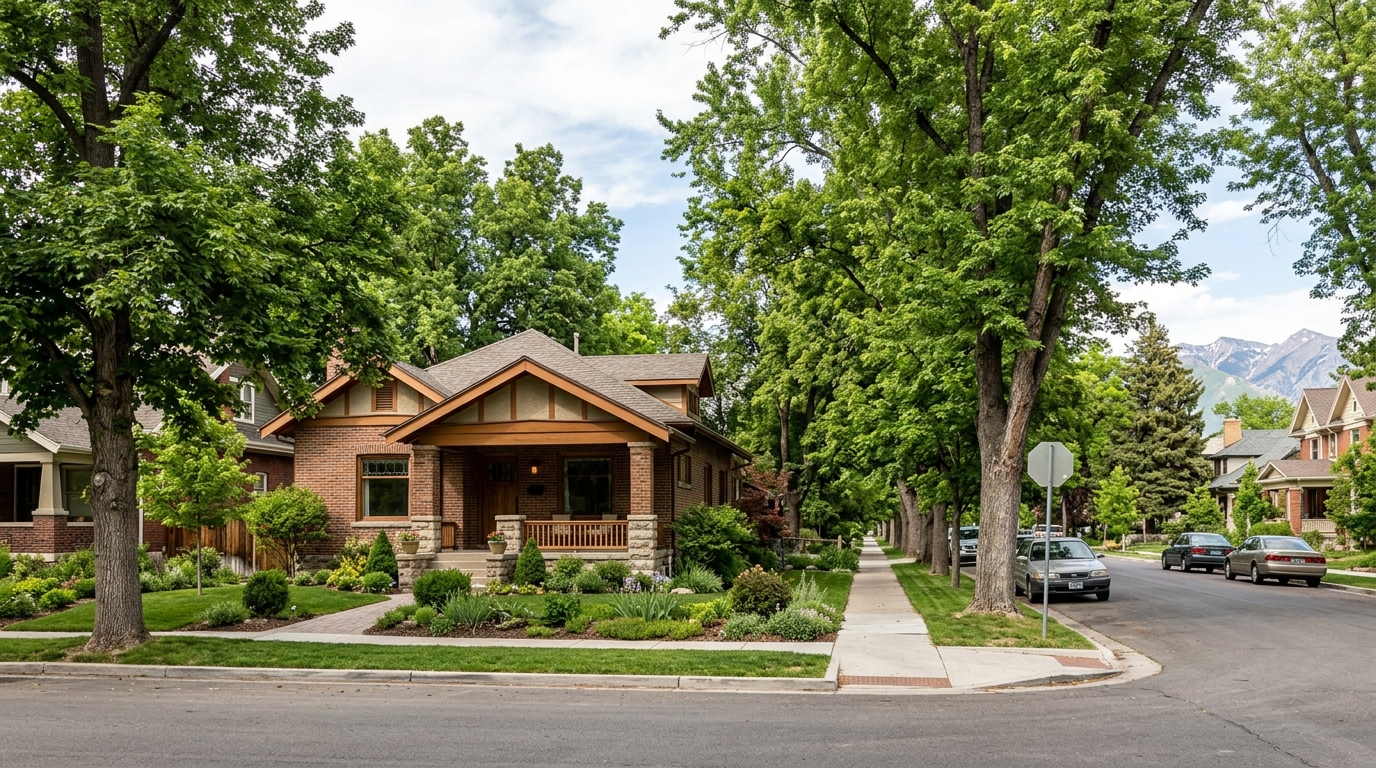
What Is It Like to Live in Sugar House, Salt Lake City?
Sugar House offers a mix of established residential streets, commercial activity, parks, and attached housing within Salt Lake City. Daily life depends on the particular block and the home: a property near shops may have different parking, noise, maintenance, and travel conditions from one farther into a residential street. Test the routines you need rather than assuming a neighborhood-wide walkability or commute promise.
Short Answer
Start with the address. Compare the route to daily services, the home’s systems and renovation history, parking, zoning, and any association or local historic restrictions. The commercial core around 2100 South and 1100 East is a useful orientation point, but it does not describe every Sugar House property.
What It Is Like to Live in Sugar House: A Quick Overview
Sugar House is a mixed-use, mixed-density neighborhood in the southeast quadrant of Salt Lake City, and daily life here centers on walkability plus quick freeway access rather than large-lot suburban quiet.
The commercial core offers a concentration of shops and dining, while surrounding streets contain a mix of detached and attached homes. Salt Lake City describes Sugar House Park as a 110.5-acre regional green space. For current park access and activities, use the Park Authority’s website. Decide whether these resources fit your routine by walking the complete route from the property. Sugar House is not a planned HOA suburb; unlike Daybreak or newer Cottonwood Heights subdivisions, it has no single governing association, so rules vary parcel by parcel and you verify them at the address level, not the community level.
What To Verify Before Deciding
Kamee Shrope Realty recommends address-specific homework because two houses on the same street can carry very different constraints. Use this compact checklist before you tour, and again before you write.
| Decision factor | What it means in Sugar House | What to verify |
|---|---|---|
| Zoning & overlay | Lots range from single-family (R-1) to mixed-use near 2100 South | Confirm base zone and any historic/design overlay with Salt Lake City Planning |
| Home age & systems | Check the recorded construction date and subsequent work | Ask the inspector which sewer, electrical, structural, and other specialist reviews are appropriate |
| ADU eligibility | Basement and detached ADUs are allowed on some parcels | Check lot size and current SLC ADU rules for that exact address |
| Noise & through-traffic | Blocks off 2100 South and 1300 East carry commuter volume | Visit at 8 a.m. and 6 p.m. on a weekday |
| Flood/creek proximity | Some pockets sit near Parley's-fed drainages | Review FEMA flood map for the parcel |
| School boundary | Boundaries split within the neighborhood | Confirm assignment with Salt Lake City School District by address |
For a broader cost picture beyond the purchase itself, compare this against the cost of living across Salt Lake City so the monthly number, not just the price, drives your decision. More detail is available at kameeshroperealty.com.
The Sugar House Lifestyle: Walkability, Dining, and Daily Pace
Walkability is address-specific. Walk from the home to the grocery store, transit stop, park, and other destinations you would use. Check sidewalks, crossing signals, slopes, lighting, and the return route at the relevant time of day.
Visit during business hours and in the evening to assess the activity around the exact block. Verify that the businesses important to your routine are operating and within a route you would actually use.
Choose based on the home and your practical requirements. Resident stereotypes do not establish whether a location will suit your household.
The honest trade-off with the lifestyle is noise and parking. The blocks nearest 2100 South and 1300 East carry commuter through-traffic and evening restaurant demand, so compare actual traffic, deliveries, parking, and noise at each address. Walk the specific block at 8 a.m. and again at 6 p.m. before deciding, because the difference between a quiet street and a cut-through is not visible on a midday tour (kameeshroperealty.com).
Outdoor Access, Parks, and Recreation Near Sugar House
Sugar House Park provides open space and recreation within the neighborhood. The city’s park description and Park Authority provide site information and current visitor guidance.
The park is jointly overseen by the Sugar House Park Authority in coordination with Salt Lake County Parks & Recreation and Salt Lake City, and it operates on posted daily hours that shift seasonally, so confirm current opening and closing times on sugarhousepark.org before planning an early-morning run or a late-evening event. Gate and lot hours are enforced, which matters if you rely on the park for a dawn workout.
Beyond the park itself, Sugar House connects to the broader east-side trail and canyon network. The Parley's Trail corridor links the area toward Parley's Canyon and the wider valley trail system, and the mouth of the Wasatch canyons puts skiing and hiking within a manageable drive, which is a core reason buyers weigh Sugar House against foothill options like the older east-side streets of Yalecrest.
The trade-off for outdoor buyers: Sugar House gives you a large in-neighborhood park and trail access, but it does not put you at a canyon trailhead the way Cottonwood Heights does. If daily canyon access outranks walkable errands, compare Sugar House against foothill neighborhoods before you settle, and use this rundown of Salt Lake City neighborhoods to frame that choice.
Housing Styles and Home Character in Sugar House
Kamee Shrope Realty describes the split as the practical answer to what kinds of homes are available in Sugar House: character-rich older houses inland, newer attached product near 2100 South.
For an older home, review the recorded age, permits, renovation invoices, and disclosed system history. Ask the inspector whether a sewer scope, electrical evaluation, structural review, or another specialist inspection is appropriate. Age alone does not establish a defect, and newer finishes do not prove that hidden systems were replaced.
The newer condo and townhome supply near the core answers a different buyer. If you want walkable, lock-and-leave living without a lawn or a 1930s furnace, the attached product near 2100 South is the fit; if you want a yard, mature trees, and square footage, the interior bungalow streets deliver it at the cost of deferred-maintenance homework.
Sugar House is not a uniform-price neighborhood. A renovated bungalow on a quiet interior street and a dated fixer on an arterial can differ sharply, so lean on comparable sales at the block level rather than a neighborhood average. For the mechanics of financing and closing an older Utah home, review how the home-buying process works in Utah before you tour (kameeshroperealty.com).
Getting Around: Commuting, Transit, and Location
Transportation should be evaluated from the actual address to your destinations, including parking and any transit transfers.
Test the airport trip at your normal departure and arrival times, including congestion, weather, and the final route to the property. A general neighborhood travel estimate is not a dependable door-to-door promise.
The S-Line streetcar connects the Sugar House corridor to Central Pointe, where riders can transfer to TRAX. It is not a direct S-Line ride downtown. Use UTA’s current rail map and service-disruption notices when testing a transit trip, including construction changes.
The practical trade-off is the same one that defines the neighborhood: the arterials that give you fast access, 2100 South, 1300 East, and 700 East, also concentrate traffic and noise. An on-ramp may change the route, while traffic noise and other conditions still require an address-specific visit, so weigh the specific block against your tolerance and drive the route at rush hour before you decide (kameeshroperealty.com).
How to Verify Neighborhood Fit by Address Before You Buy
Buyers should verify zoning, home systems, school boundary, and traffic exposure at the exact address before committing to a Sugar House home, because this neighborhood's rules and conditions change parcel by parcel rather than community-wide. Sugar House has no single HOA, so there is no master rulebook; the address is the unit of verification.
Start with zoning and overlays. Pull the parcel through Salt Lake City Planning to confirm the base zone, any historic or design overlay, and whether an accessory dwelling unit is permitted on that lot. ADU eligibility depends on lot size and current city rules and directly affects both value and rental potential.
Arrange the general inspection and any specialist work recommended for the home’s condition and records. Track unresolved questions against the contract deadlines; a video tour or a neighborhood description cannot establish the condition of hidden systems.
Confirm the school boundary and the traffic reality last. School assignments split within Sugar House, so verify the specific assignment with the Salt Lake City School District by address, and visit the block at 8 a.m. and 6 p.m. to hear the actual traffic rather than a quiet midday snapshot. For the full paperwork sequence, the documents to review before buying a Salt Lake City home guide lays out what to request and when.
Working With a Local Sugar House Agent
Kamee Shrope Realty is a luxury advisory practice under Engel & Völkers Salt Lake City serving Sugar House and the surrounding east-side neighborhoods, and the value of a local agent here is address-level knowledge rather than broad market summaries. In a neighborhood where two houses on one street carry different zoning, systems risk, and traffic exposure, block-level judgment is the difference between a clean purchase and a surprise.
Ask an advisor how they gather zoning, permit, condition, and traffic evidence, and which questions require a city official, inspector, or other qualified professional. An agent should identify unknowns rather than imply prior knowledge of every parcel’s defects. If you want to compare Sugar House against nearby options, start with working with a Sugar House real estate specialist or reach out via kameeshroperealty.com.
Content updated September 27, 2026.
Work With Kamee Shrope in Sugar House Salt Lake City
Kamee Shrope helps buyers and sellers weigh neighborhoods against commute, budget, and daily-routine fit. The service area covers Avenues, Cottonwood Heights, Federal Heights, Holladay, Sugar House, and Yalecrest, and the next conversation can turn school-boundary checks, association obligations and special assessments, and current inventory into a shortlist worth touring.
- Service areas: Avenues, Cottonwood Heights, Federal Heights, Holladay, Sugar House, and Yalecrest.
- Office or service-area location: 1987 South 1100 East.
- Phone: (801) 628-1281
- Email: kamee.shrope@evrealestate.com
- Google Business Profile: Kamee Shrope Realty on Google Maps
- Contact: https://kameeshroperealty.com/contact
Frequently Asked Questions
Kamee Shrope Realty answers the most common Sugar House questions below.
What is it like to live in Sugar House?
Sugar House combines commercial activity, parks, established residential streets, and a mix of housing forms within Salt Lake City. Evaluate walkability, parking, noise, condition, and maintenance at the address you are considering.
Is Sugar House a good neighborhood to live in?
For buyers and renters who prioritize walkability, proximity to parks, and an established neighborhood feel, Sugar House consistently draws strong interest. It is not the right fit for everyone, those wanting newer construction, larger lots, or quieter surroundings may find other Salt Lake City neighborhoods more suitable. The decision comes down to what daily life should look like, not a universal ranking.
Is Sugar House walkable?
Some addresses provide practical walks to shops, services, and transit, while others require a different travel routine. Test your specific destinations, crossings, and route conditions before relying on a car-light plan.
How far is Sugar House from downtown Salt Lake City?
The trip depends on the starting address and destination. The S-Line connects to TRAX at Central Pointe; downtown travel requires the appropriate transfer. Use current schedules and test the complete trip, including walking and waiting time.
What kinds of homes are available in Sugar House?
Sugar House housing stock is dominated by bungalows, Tudor-style cottages, and brick homes built primarily in the early to mid-twentieth century, alongside a growing number of condos and townhomes in newer infill developments. Buyers looking for a historic single-family home with original character will find options here; those wanting new construction have more limited choices within the neighborhood boundary itself. Current availability and pricing should be verified against active MLS listings, as inventory shifts frequently in this part of the market.