Documents to Review Before Buying a Home in Salt Lake City

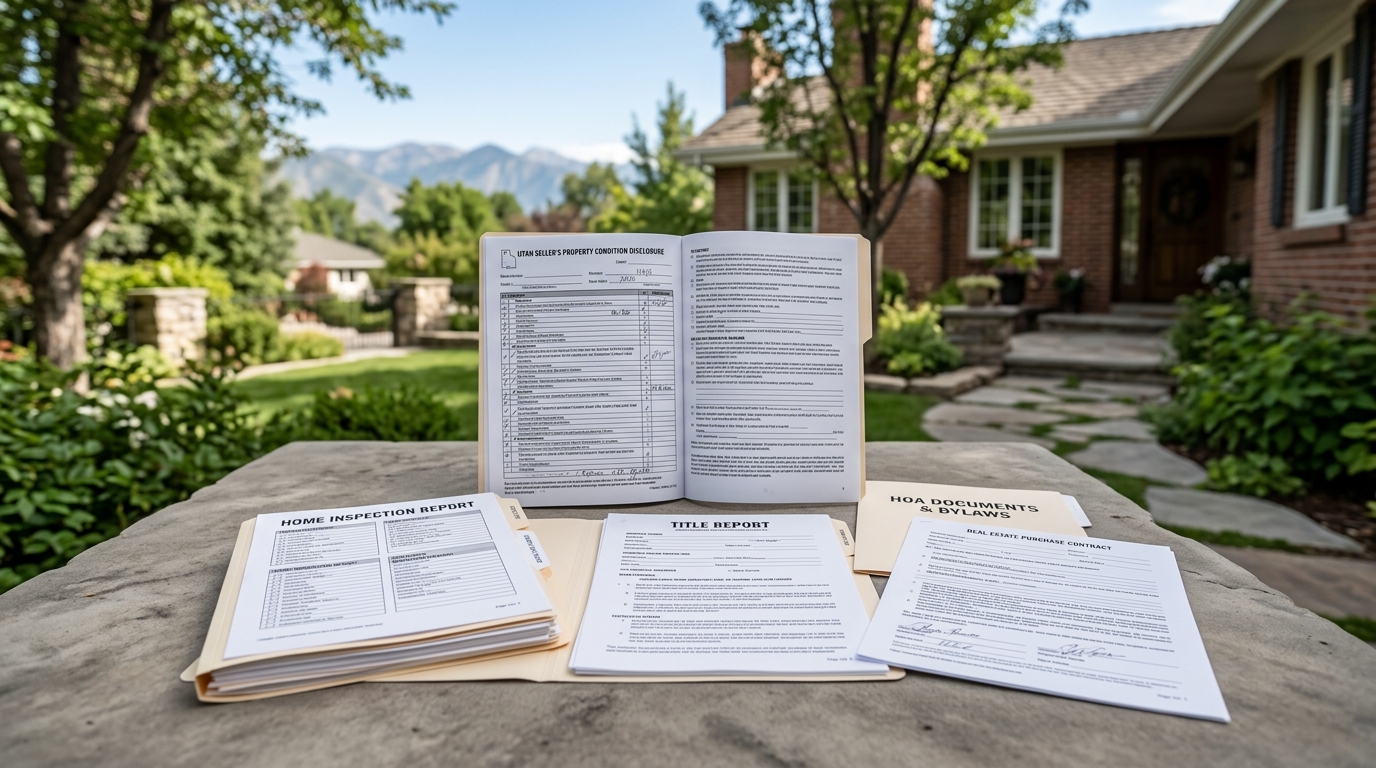
Utah seller property condition disclosure

Documents to Review Before Buying a Home in Salt Lake City

By Kamee Shrope · Global Real Estate Advisor, Engel & Völkers Salt Lake City · July 15, 2026 · 12 min read

All Articles

Documents to Review Before Buying a Home in Salt Lake City

Kamee Shrope Realty advises buyers across Salt Lake City that the document review before an offer matters as much as the tour itself, because Utah is a caveat emptor state and the paper trail is where the real condition of a home surfaces. The single most important document you will read is the Utah seller property condition disclosure, the form where the seller states in writing what they know about the roof, systems, water intrusion, and defects. Alongside it you will want the title report, the HOA package where one applies, the inspection report, and the signed Real Estate Purchase Contract itself. This guide walks through each document, what it controls, and how to verify property-specific details by address rather than by assumption.

Short Answer

Kamee Shrope Realty advises buyers to review five document sets before committing to buy a home in Salt Lake City: the Seller's Property Condition Disclosure, the preliminary title report, any HOA governing documents and financials, the home inspection report, and the signed Utah Real Estate Purchase Contract with its deadlines. Utah is a caveat emptor ("let the buyer beware") state, which places due-diligence responsibility on the buyer (as of July 2026). The Seller's Property Condition Disclosure is tied to the Utah Real Estate Purchase Contract (REPC) and delivered by a Seller Disclosure Deadline set in the contract (as of July 2026), per the Utah Association of REALTORS. The most important verification step is to read every document against the actual property address and legal description, not against the listing photos or verbal claims, before your Due Diligence Deadline passes.

Buyer Due Diligence Note

Kamee Shrope Realty offers this guide as educational material, and it should not be treated as legal, tax, lending, or title advice. Before relying on a property decision, verify the exact address with county records, title documents, HOA materials, district filings, lender estimates, and appropriate professional advisors. The Due Diligence period in Utah is a negotiated window, commonly 14 calendar days, written into Section 24(a) of the REPC, so confirm your own deadline dates against the signed contract.

What Documents Should Buyers Review Before Making a Decision in Salt Lake City?

Kamee Shrope Realty structures every buyer's document review around the deadlines written into the Utah Real Estate Purchase Contract, because in Salt Lake City the calendar controls your leverage.

Buyers in Salt Lake City should review five core document sets before deciding. First is the Seller's Property Condition Disclosure, where the seller states known issues with the structure, roof, plumbing, electrical, and history of water or pest problems. Second is the preliminary title report, which shows liens, easements, and ownership tied to the legal description. Third, if the home sits in an HOA, request the CC&Rs, bylaws, budget, reserve study, and meeting minutes. Fourth is the home inspection report, which independently tests what the seller disclosed. Fifth is the signed Real Estate Purchase Contract with its Seller Disclosure Deadline and Due Diligence Deadline. Utah is a caveat emptor state, placing due-diligence responsibility on the buyer (as of July 2026). Verify each document against the property address before your deadlines expire, because a missed deadline can cost your earnest money. The practical sequence matters. In neighborhoods like Yalecrest and the Avenues, where housing stock predates the 1940s, buyers I work with almost always prioritize the inspection and title review, since older homes carry the highest odds of undisclosed foundation, sewer line, or electrical surprises.

For a structured request list you can bring to your agent, see which documents buyers should request before deciding in Salt Lake City.

The Seller's Property Condition Disclosure and What It Does (and Doesn't) Cover

Kamee Shrope Realty treats the Seller's Property Condition Disclosure as the starting map for buyers: it is a standardized form on which a Utah seller states, in writing, the known material facts about a home's condition. It covers structural components, the roof, plumbing and electrical systems, heating and cooling, water intrusion history, prior repairs, and known issues with appliances or the lot. The Seller's Property Condition Disclosure is tied to the Utah Real Estate Purchase Contract (REPC) and delivered by a Seller Disclosure Deadline set in the contract (as of July 2026), and you can review the standardized form language through the Utah Association of REALTORS (utahrealtors.com).

What the disclosure does is give you the seller's stated knowledge, which becomes a written record you can hold them to. What it does not do is guarantee the home's condition or substitute for your own inspection. A Utah seller property condition disclosure reflects only what the seller actually knows; a seller who has never been in the crawlspace cannot disclose a problem they never observed. That gap is exactly why the inspection exists as a separate, independent check.

The boundary here is important: the disclosure is not a warranty and it is not an inspection report. Unlike an inspection performed by a licensed professional, the disclosure carries no obligation for the seller to investigate. Treat it as a starting map of known issues, then verify it against what your inspector finds.

In Cottonwood Heights and Holladay, where many homes sit on the East Bench with grading that channels canyon runoff, the water-intrusion and drainage sections of the disclosure deserve line-by-line attention before you move on.

Title, HOA, and Ownership Documents to Verify by Address

Kamee Shrope Realty reads every preliminary title report against the legal description before closing, because that report confirms who legally owns the property and what claims are attached to it. The report lists recorded liens, easements, rights-of-way, and any covenants that run with the land. In Federal Heights and the upper Avenues, easements for shared driveways and utility access are common on older platted lots, so confirm the easement language matches the physical property you toured.

For any home in a homeowners association, request the full HOA package: the CC&Rs, bylaws, current operating budget, the reserve study, and recent meeting minutes. These documents state the monthly dues, any pending special assessments, and rules that restrict short-term rentals or exterior changes. A reserve study that shows an underfunded roof or road fund signals that a special assessment is coming, which changes the true cost of ownership.

Verify ownership details by address, not by the listing sheet. Pull the parcel record through the Salt Lake County Assessor and match the taxable value, square footage, and lot dimensions to what the seller represented., per the Salt Lake County Auditor, so the assessed figure on the parcel record is not the same as market value.

One more East Bench caveat: some historic districts carry recorded restrictions. In Salt Lake City historic overlays, a property rebuilt after demolition without a certificate of appropriateness can carry a restrictive covenant that prohibits demolition and major alterations to the reconstructed structure for 25 years from the date of the certificate of occupancy, transferable to any future owner, per Salt Lake City Zoning Ordinance 21A.34.020. That is a title-recorded, buyer-facing restriction worth confirming on any renovated Yalecrest or Avenues home.

Inspection, Repair, and Contract Documents to Confirm in Writing

Kamee Shrope Realty relies on the home inspection report as the buyer's primary tool for testing what the seller disclosed, since it is the independent, professional assessment of a property's physical condition. A licensed inspector evaluates the roof, foundation, electrical, plumbing, HVAC, and drainage, then documents findings you can act on. Because Utah places the burden of discovery on the buyer, this report is where undisclosed problems in a 1920s Sugar House bungalow or a mid-century Holladay ranch typically surface.

Confirm every repair agreement in writing, never verbally. Under the REPC framework, any negotiated repair, credit, or price adjustment after the inspection must be documented in a written addendum signed by both parties. Any extension of a deadline must be in writing using UAR Form 8, the Addendum to REPC, signed by both buyer and seller; a verbal agreement to extend is not enforceable under Utah contract law. A seller who promises to fix the furnace but never signs an addendum leaves you with no enforceable claim.

Match the inspection findings to your contract deadlines. The Due Diligence period in Utah is a negotiated window, commonly 14 calendar days, written into Section 24(a) of the REPC; during it buyers may inspect the property, review the Seller's Property Condition Disclosure, examine title and HOA documents, and advance their loan..

The inspection controls three decisions: continue as agreed, renegotiate through a written addendum, or terminate.. That refund right is the leverage the whole due-diligence window is built around, which is why the calendar cannot slip.

For a deeper walkthrough of the inspection itself, read our home inspection guide for Utah buyers, and if you are new to the process, our overview of how to buy a home in Utah lays out the full sequence.

How Buyer Due Diligence Works in Utah's Caveat Emptor Framework

Kamee Shrope Realty operates inside Utah's caveat emptor doctrine, a legal principle meaning "let the buyer beware" that places the responsibility to investigate a property squarely on the buyer rather than the seller. (as of July 2026), a framing confirmed in overviews of the Utah real estate purchase agreement. This does not mean a seller can lie; it means a seller is not obligated to hunt for defects on your behalf, so you must verify.

In practice, caveat emptor is why your inspection, title review, and disclosure reading all happen inside a fixed window. The doctrine is not a loophole for fraud; a seller who actively conceals a known defect can still face liability. But the burden of ordinary discovery, the sewer scope, the radon test, the drainage check on an East Bench lot, falls on you.

The contract framework you operate in changes soon. A new REPC was approved by the Utah Real Estate Commission and is pending Utah Attorney General approval, effective January 1, 2027 (as of July 2026). The current state-approved forms are published by the Utah Division of Real Estate (commerce.utah.gov/realestate).

What To Verify Before Deciding

  • Seller's Property Condition Disclosure: Confirm you received it by the Seller Disclosure Deadline in your contract, and read the water-intrusion and structural sections against your inspector's findings.
  • Preliminary title report: Match the legal description to the address, and flag every easement and lien, especially shared-driveway easements common in Federal Heights and the Avenues.
  • HOA package: Request the CC&Rs, budget, reserve study, and minutes; an underfunded reserve signals a possible special assessment.
  • Home inspection report: Order a sewer scope and drainage check on older or East Bench homes in Cottonwood Heights, Holladay, and Yalecrest.
  • Signed REPC and addenda: Confirm every repair and deadline extension is in writing on UAR Form 8; verbal promises are not enforceable.
  • Parcel record: Verify square footage, lot size, and taxable value through the Salt Lake County Assessor before you rely on the listing sheet.
  • Historic overlay restrictions: Check for recorded covenants on renovated homes in Salt Lake City historic districts.

How Kamee Shrope Helps Buyers Organize Document Review Across Salt Lake City Neighborhoods

Kamee Shrope Realty organizes buyer document review around the specific risks of each Salt Lake City neighborhood, so the review effort matches where problems actually appear. Kamee Shrope is a luxury real estate advisor with Engel & Völkers Salt Lake City, serving the Salt Lake Valley and Park City, and the firm's buyer representation includes building a document checklist tied to your contract's Seller Disclosure Deadline and Due Diligence Deadline.

The approach is neighborhood-specific because the documents that matter shift by area. A Sugar House bungalow review centers on the inspection and sewer line, given the age of the housing stock. A Cottonwood Heights or Holladay East Bench purchase puts drainage, grading, and the disclosure's water-intrusion section first. A Federal Heights or Avenues home often turns on the title report and its easements. A renovated Yalecrest property calls for a historic-overlay covenant check.

The most common timing question buyers ask is whether to write before or after reviewing the full disclosure and title package. The honest answer depends on the market for that specific home; a well-priced Sugar House listing may require an offer first with the review inside the Due Diligence window, while a longer-listed Holladay home gives you room to review before writing.

If you want to compare two candidates on paper before deciding, our guide to how buyers compare two homes after a showing pairs well with a document review, and buyers weighing areas can start with a look at Salt Lake City neighborhoods.

Reviewed for freshness: July 2026.

Work With Kamee Shrope in Salt Lake City

Kamee Shrope helps buyers compare showing notes, visible condition, daily routine fit, route feel, and follow-up questions across Avenues, Cottonwood Heights, Federal Heights, Holladay, Sugar House, and Yalecrest. Use the next conversation to decide whether a home deserves a second look, a specific follow-up question, or a clean pause.

Frequently Asked Questions

Kamee Shrope Realty answers the questions buyers ask most often before reviewing the five document sets and the 14-calendar-day Due Diligence window.

What documents should buyers review before buying a home in Salt Lake City?

At minimum, buyers should review the seller's property condition disclosure, the preliminary title report, any HOA governing documents if applicable, and the inspection report. Each of these covers a different layer of risk, the disclosure captures what the seller knows, the title report surfaces liens or encumbrances, and the inspection catches physical conditions the seller may not have been aware of. Skipping any one of them leaves a meaningful gap in what you understand about the property before closing.

Does Utah require a seller disclosure form when selling a home?

Yes. Utah law requires sellers of residential property to complete a Seller's Property Condition Disclosure form, which is a standardized document covering known material defects, past repairs, and conditions affecting the property. The form is not a warranty, but it does create a legal record of what the seller represented at the time of sale. Buyers should read it carefully and cross-reference it against the home inspection rather than treating it as a substitute for one.

What does caveat emptor mean for Utah home buyers?

Caveat emptor is Latin for 'let the buyer beware,' and in a real estate context it means the buyer bears responsibility for investigating the property's condition before closing. Utah has moved away from a strict caveat emptor standard by requiring seller disclosures, but the principle still applies in important ways, sellers are only obligated to disclose what they actually know, so undisclosed or unknown defects can still surface after purchase. Due diligence through independent inspections remains the buyer's primary protection.

Who prepares the purchase contract in a Utah home sale?

In Utah, the purchase contract is typically prepared using the REPC, the Real Estate Purchase Contract, which is a standardized form developed and approved for use by real estate licensees in the state. The buyer's agent generally drafts the initial offer, and both agents facilitate negotiation of terms from there. Because the REPC governs contingencies, disclosure deadlines, and earnest money conditions, it's worth reading the full document rather than relying solely on a summary.

How do I verify property-specific details before making an offer in Salt Lake City?

Salt Lake County's public records, including tax assessor data and recorded documents, are searchable online and can confirm lot size, legal description, ownership history, and any recorded liens or easements. For properties within an HOA, request the current financials, meeting minutes, and CC&Rs directly from the association or management company, since those documents are not part of the MLS listing. Cross-referencing public records against the seller disclosure gives you a clearer picture of whether the two sources align before you commit to an offer.

Ready to Talk?

Get in Touch with Kamee

Tell her about your goals — she'll get back to you within one business day.

Stay in the Loop

Add Kamee as a Preferred Source on Google

Get Kamee's latest Salt Lake & Park City real estate articles, market updates, and listing previews prioritized in your Google feed.

Contact Me