Living in Cottonwood Heights: A Neighborhood and Lifestyle...

City Between the Canyons

Living in Cottonwood Heights: A Neighborhood and Lifestyle...

By Kamee Shrope · Global Real Estate Advisor, Engel & Völkers Salt Lake City · July 20, 2026 · 10 min read

All Articles

Living in Cottonwood Heights: A Neighborhood and Lifestyle Guide

Kamee Shrope Realty works with buyers across the Salt Lake City east bench, and Cottonwood Heights comes up constantly for one reason: it sits at the mouth of Big and Little Cottonwood Canyons, earning its reputation as the City Between the Canyons. This guide covers where it sits, what canyon access actually buys you, how the commute works, and what to verify before you write an offer.

Short Answer

Kamee Shrope Realty works with buyers in Cottonwood Heights, a Salt Lake County city of approximately 31,998 residents (World Population Review, 2026) positioned at the base of the Wasatch Range, directly at the mouths of Big and Little Cottonwood Canyons. It suits buyers who want daily canyon and ski access, a residential rather than resort feel, and Salt Lake County property tax rates instead of Summit County's higher second-home tax structure. High-end inventory clusters in pockets like Bywater, Canyon Cove, and Top of the World, where half-acre lots look straight up at Little Cottonwood's granite walls. The single most important verification step: pull the exact CC&Rs, HOA dues, and current Salt Lake County tax figures for the specific subdivision you are considering, because pricing and rules vary block to block across the city.

What Is Living in Cottonwood Heights Like?

Kamee Shrope Realty describes Cottonwood Heights as a foothill residential city defined by immediate mountain access, quiet neighborhoods, and a short commute to both downtown and the tech corridor. It is a full-time residential community on Salt Lake County tax rates, not a resort town like Park City. It sits 45 minutes west of the Park City ski-town lifestyle (KUER, June 16, 2026).

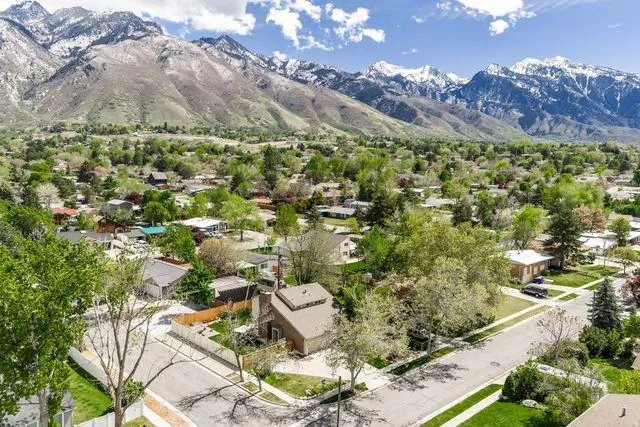
Living in Cottonwood Heights means waking up at 4,823 feet of elevation (USGS topographic data) with the Wasatch Range immediately east and the rest of the Salt Lake Valley spread out to the west. The city has a population of approximately 31,998 as of 2026 (World Population Review, 2026) and a median age of 40 years (most recent Census-based data), which reads on the ground as a mix of established buyers, medical and tech professionals, and outdoor-focused households. The mean travel time to work is 21.9 minutes (U.S. Census American Community Survey), shorter than many valley suburbs because the city sits close to both the University of Utah corridor and the Silicon Slopes commute. Daily life leans toward canyon recreation, neighborhood errands, and easy freeway access, rather than a dense walkable core. It is a car-oriented, mountain-adjacent lifestyle with strong resale demand tied to that canyon proximity. The buyer pool here skews toward Salt Lake professionals, surgeons working at nearby Alta View and Intermountain Medical Center, tech executives commuting to the Cottonwood Corporate Center, and out-of-state buyers who want ski proximity without the second-home tax bill of Park City. That mix keeps demand steady across price bands.

If you want a sense of how the surrounding east bench compares, it helps to look at the stronger residential pockets across Salt Lake City before narrowing to one city.

Where Cottonwood Heights Sits: The City Between the Canyons

Kamee Shrope Realty notes that Cottonwood Heights sits at 4,823 feet of elevation (USGS topographic data) on the southern east bench, holding its defining geographic feature at the mouths of both Big and Little Cottonwood Canyons, which is exactly why it functions as the City Between the Canyons.

The city is part of the southern east bench, sitting alongside neighboring communities like East Millcreek, Holladay, and Granite. Buyers who like this foothill positioning weigh what daily life in nearby Holladay looks like, since the two share mature trees, quiet streets, and canyon-mouth access at different price points.

Elevation matters here as a practical factor, not trivia. At 4,823 feet, the higher foothill pockets like Top of the World hold snow longer and grade steeply, which affects driveway design, winter tire needs, and view premiums. Verify the specific street's grade and snow exposure by touring in person, ideally once in winter, before committing to an uphill lot.

Outdoor Recreation and Canyon Access From Cottonwood Heights

Kamee Shrope Realty considers Cottonwood Heights to offer some of the most direct canyon and ski access of any full-time residential city in the Salt Lake Valley, which is its single biggest draw for outdoor buyers. The mouths of Big and Little Cottonwood Canyons sit at the city's eastern edge, putting four major resorts, Brighton and Solitude up Big Cottonwood, Alta and Snowbird up Little Cottonwood, within a short drive.

The canyon commute is real, and it is changing. UTA buses run every 30 minutes until 2028 (KUER, June 16, 2026). UDOT intends to have the fully funded phase one of the transportation plan operational in the fall of 2028 (KUER, June 16, 2026). If you are buying partly for canyon access, ask your agent where the proposed gondola base and tolling points fall relative to the specific home.

Beyond skiing, the canyons deliver year-round hiking, biking, and trail running, which is why so many households here treat the mountains as an extension of the backyard. For buyers prioritizing that daily access, our guide to buying a home with outdoor lifestyle access in Utah walks through how to weigh trail proximity against price.

Everyday Amenities, Dining, and Commute

Kamee Shrope Realty finds that Cottonwood Heights covers daily needs through practical retail corridors and a genuinely short commute, though it is not a dense, walkable downtown. Everyday errands center on corridors like Fort Union Boulevard and Bengal Boulevard, with grocery, dining, and services clustered rather than spread into one walkable core. The citywide mean travel time to work is 21.9 minutes (U.S. Census American Community Survey).

The commute is one of the city's underrated strengths. Off-peak drive times from this part of the east bench put downtown Salt Lake City at 15 to 20 minutes and the University of Utah at a similar 15 to 20 minutes, while Lehi in the Silicon Slopes tech corridor runs 25 to 35 minutes. That dual reach, close to both the medical and university core and the tech corridor, is unusual in the valley.

The tradeoff is straightforward: you gain canyon proximity and quick freeway access via I-215 and I-80, but you give up the walkable street life of a place like Sugar House. If a walkable core matters more to you than trailheads, compare the cost of living across Salt Lake City neighborhoods before deciding, because the price-per-lifestyle math shifts noticeably by area.

Who Cottonwood Heights Tends to Suit

Kamee Shrope Realty observes that Cottonwood Heights suits buyers who put daily mountain access at the top of the list and want a full-time residential community rather than a resort or a walkable urban core. It fits medical professionals near Alta View and Intermountain Medical Center, tech workers commuting to the Cottonwood Corporate Center or Silicon Slopes, and buyers drawn to the foothill setting.

It is a strong fit for buyers who want ski proximity without Summit County's second-home tax structure. That gap is the core financial argument for buyers choosing the east bench over the resort town.

It is a weaker fit for buyers who want to walk to dinner, want minimal winter driving, or want a low-maintenance lock-and-leave without a car. Those buyers are usually happier in a denser Salt Lake neighborhood. If mountain views specifically are the priority, our roundup of the strongest places for mountain views in Utah is worth reviewing against Cottonwood Heights.

The honest median-age read here is a mix, not a single demographic. At a median age of 40 years (most recent Census-based data), you get established buyers and mid-career professionals more than students or retirees, though all are present.

What To Verify Before Deciding

Kamee Shrope Realty recommends that before choosing Cottonwood Heights over another east bench community, you verify these specifics for the exact subdivision and street you are considering:

Decision factor What to check Why it matters here
Property taxes Current Salt Lake County rate and assessed value for the parcel The county-rate advantage over Summit County is a core reason buyers choose here
HOA and CC&Rs Dues, rental limits, and rules in gated pockets like Canyon Cove Rules vary block to block; some enclaves are gated, others are not
Lot grade and snow Driveway slope, winter exposure, snow-hold on uphill lots Higher foothill lots near Top of the World grade steeply and hold snow
Commute reality Drive your actual route at peak hours Off-peak 15 to 20 minutes to downtown climbs with canyon and rush traffic
Resale demand Recent comparable sales in the specific pocket Bywater, Canyon Cove, and Top of the World price differently

How To Verify Fit Before Buying in Cottonwood Heights

The most reliable way to confirm Cottonwood Heights fits you is to test the specific home against your actual routine before you write an offer, not to rely on citywide averages. Averages hide the block-to-block variation that decides whether a given street works for you.

Start with the tax and rules paperwork. Pull the current Salt Lake County property tax figures for the parcel and read the full CC&Rs and HOA dues for the subdivision, because a gated enclave like Canyon Cove carries different rules and costs than an ungated street nearby. Confirm rental limits in writing if you might ever lease the home.

Next, drive your real commute at the real hour. The 15-to-20-minute off-peak figure to downtown Salt Lake City is accurate off-peak, but your morning reality depends on whether you are also fighting canyon ski traffic on a powder day. Test it on a weekday and, if you ski, on a Saturday morning in season.

Finally, tour in both seasons if you can, especially on uphill lots. A summer visit will not tell you how a steep driveway in Top of the World handles February. Kamee Shrope and the Engel & Völkers Salt Lake City team can pull current comps, HOA documents, and county tax figures for any specific address so you compare real numbers rather than estimates. If you are still weighing the east bench broadly, the steps for buying a home in Utah and a look at current Cottonwood Heights listings and community detail are the right next reads.

Reviewed for freshness: July 2026.

Work With Kamee Shrope in Cottonwood Heights

Kamee Shrope helps buyers and sellers weigh neighborhoods against commute, budget, and daily-routine fit. The service area covers Avenues, Cottonwood Heights, Federal Heights, Holladay, Sugar House, and Yalecrest, and the next conversation can turn school-boundary checks, HOA or metro-district tolerance, and current inventory into a shortlist worth touring.

Frequently Asked Questions

Kamee Shrope Realty answers the questions buyers ask most about Cottonwood Heights, a city of approximately 31,998 residents (World Population Review, 2026) at the mouths of Big and Little Cottonwood Canyons.

Where is Cottonwood Heights located?

Cottonwood Heights sits in the southeastern corner of Salt Lake County, bordered by the Wasatch Mountains to the east and established suburban communities to the north and west. Its position places it at the mouth of both Big and Little Cottonwood Canyons, which is how the city earned the informal label 'City Between the Canyons.'

How far is Cottonwood Heights from ski resorts and canyons?

The mouths of Big Cottonwood Canyon and Little Cottonwood Canyon are essentially at the city's eastern boundary, meaning the drive to the canyon floors begins within minutes of most neighborhoods. Road conditions, seasonal traffic, and UDOT canyon closures during high-avalanche-risk periods affect actual travel time on any given day.

How long is the commute from Cottonwood Heights to downtown Salt Lake City?

Peak-hour congestion on the westbound morning commute stretches that window, so proximity to the canyons comes with some trade-off in terms of distance from the urban core. TRAX light rail does not serve Cottonwood Heights directly, though bus and bus rapid transit connections exist for commuters who prefer not to drive.

What is living in Cottonwood Heights, Utah like?

Day-to-day life in Cottonwood Heights reflects a quieter, suburban pace without being far removed from urban amenities. The housing stock is largely single-family homes on established lots, and the city maintains its own parks and recreation programs. Because the canyons are immediately accessible, residents who prioritize outdoor activity fit hiking, trail running, or skiing into a weekday schedule in a way that is harder to manage from neighborhoods farther from the mountains.

Is Cottonwood Heights a good place to live for outdoor enthusiasts?

For someone who organizes a meaningful portion of their life around mountain access, Cottonwood Heights removes most of the friction that affects residents elsewhere in the valley. The trail networks in both canyons are reachable without a long drive, and the city itself has trail connections that link residential streets toward the foothills. The trade-off worth weighing is that homes closer to the canyon mouths carry higher price points, and winter canyon traffic on weekends affects how quickly you actually reach the snow.

Ready to Talk?

Get in Touch with Kamee

Tell her about your goals — she'll get back to you within one business day.

Stay in the Loop

Add Kamee as a Preferred Source on Google

Get Kamee's latest Salt Lake & Park City real estate articles, market updates, and listing previews prioritized in your Google feed.

Contact Me