Lifestyle · Salt Lake County
Living in Holladay
Wooded estate lots, Holladay Village, and canyon-oriented routes to Big and Little Cottonwood Canyons — what daily life is actually like in an established Salt Lake County residential city.
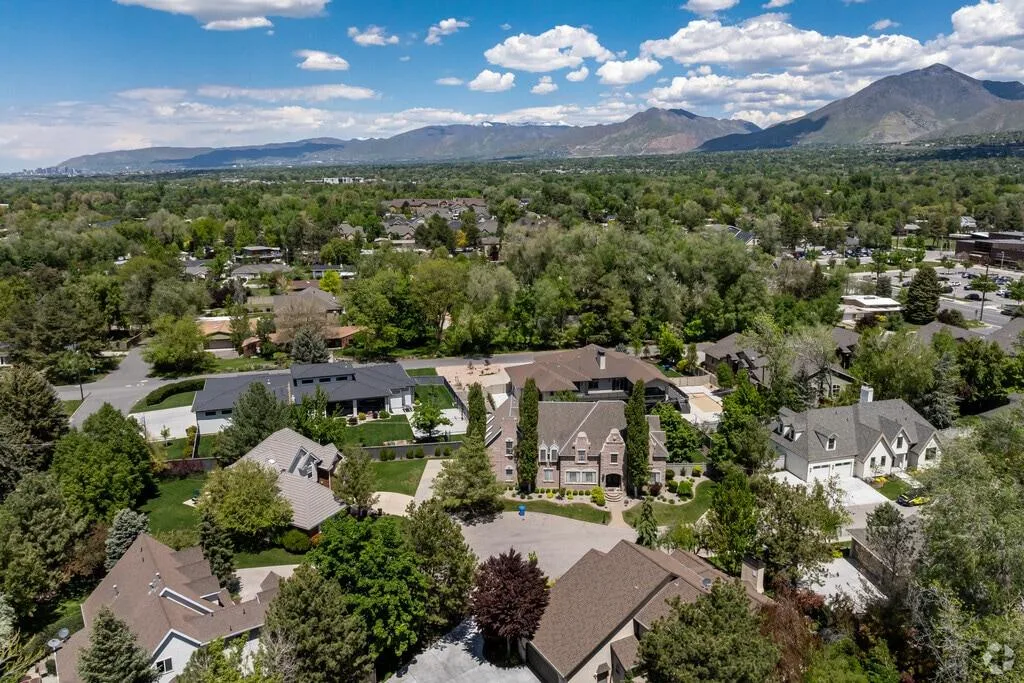
Holladay includes established streets with mature trees, mid-century houses, later custom construction, and the shops and services around Holladay Village. Compare each property’s usable outdoor space, condition, access, and maintenance requirements. Trips to Big and Little Cottonwood Canyons require checking the actual route and current road conditions.
This guide covers daily-life considerations in Holladay and how its streets compare with neighboring Salt Lake County options. For home, lot, condition, and property-search decisions, use the Holladay real estate guide. For choosing representation, see working with a Holladay real estate advisor.
What Daily Life Feels Like in Holladay
Neighborhood Character
Holladay's character is defined by mature trees, established residential streets, and a strong sense of neighborhood. Many of the city's homes sit on lots a third of an acre or larger, with substantial setbacks and significant landscaping that adds to the wooded character. Architectural variety is part of the appeal — mid-century ramblers and split-levels share streets with newer transitional and contemporary custom builds, and the mix changes meaningfully from one subarea to the next.
The feel changes by block. Village-adjacent streets have more nearby services, while eastern and canyon-side areas can have more tree cover, terrain, and outdoor maintenance. Visit at different times of day and assess street traffic, shade, drainage, and the work required to maintain the particular property.
Convenience and Access
Holladay Village provides a cluster of restaurants, shops, and services. Evaluate the route from a candidate property to the specific businesses you use, including sidewalks, crossings, grade, and opening hours. For destinations in Cottonwood Heights, Sugar House, or downtown Salt Lake City, test the actual journey at the times relevant to your routine.
Holladay has municipal services, neighborhood retail, and Wasatch foothill context. Travel conditions and access vary by address, traffic, weather, and season.
Home Style and Setting
Holladay includes mid-century ramblers and split-levels, later custom construction, and newer transitional or contemporary rebuilds. The housing mix changes among streets near Murray Holladay Road, the village crossroads, and the wooded areas toward the Cottonwood Heights boundary.
Lot size, tree cover, usable outdoor space, renovation scope, irrigation, and building systems all affect a home's comparison set. Review current listings and recent sales that match the property's location, condition, lot, and architecture rather than relying on a neighborhood-wide price pattern.
Why Buyers Continue to Be Drawn Here
Holladay offers established residential streets, the Holladay Village crossroads at 2300 East and Murray Holladay Road, nearby services, and canyon-oriented routes. Compare those features against the daily routine, maintenance tolerance, and property form you want.
School assignment, enrollment, transportation, and programs vary by address and can change. Use Granite School District's current lookup and contact the individual school before relying on an assignment. For canyon and downtown trips, test the route from the particular property at the times and conditions relevant to you.
For a Holladay search, compare streets near the village, properties toward the Cottonwood Heights boundary, and other candidates through the same criteria: tested daily routes, building condition, lot usability, and current records. Browse Holladay, explore Olympus Cove, or contact Kamee to discuss the property requirements that matter to you.
Common Questions
Living in Holladay FAQ
- Is Holladay a good place to live?
- Holladay has established residential streets, mature trees, varied home styles, and the Holladay Village service cluster. Whether it fits depends on the particular address, property condition, lot maintenance, school information, and the routes you expect to use.
- What schools serve Holladay?
- Most Holladay addresses are served by Granite School District, but assignment, enrollment, transportation, and programs vary by address and can change. Use the district's current boundary lookup and contact the relevant school before making a housing decision.
- How long does it take to get to a ski resort from Holladay?
- Holladay has municipal services, neighborhood retail, and Wasatch foothill context. Travel conditions and access vary by address, traffic, weather, and season.
- What is Holladay Village?
- Holladay Village is the walkable mixed-use cluster at the intersection of 23rd East and Murray Holladay Road. It includes restaurants (longtime local institutions plus newer additions), coffee shops, retail, professional services, and the city offices. It serves as the city's de facto town center and is a meaningful part of Holladay's residential appeal.
- How does Holladay compare to Cottonwood Heights?
- Holladay and Cottonwood Heights are adjacent and have different housing stock, terrain, services, and routes. Compare the actual property, lot maintenance, current listings, and the trips that matter to you, including the route to canyon recreation.
Start with a Conversation
Whether you're buying, selling, or exploring a move to Holladay, Kamee provides a private, no-pressure conversation about your goals — and a working plan that fits.