What should I know about the day-to-day differences between Avenues and Cottonwood Heights?

What should I know about the day-to-day differences between Avenues and Cottonwood Heights?

What should I know about the day-to-day differences between Avenues and Cottonwood Heights?

By Kamee Shrope · Global Real Estate Advisor, Engel & Völkers Salt Lake City · July 24, 2026 · 8 min read

All Articles

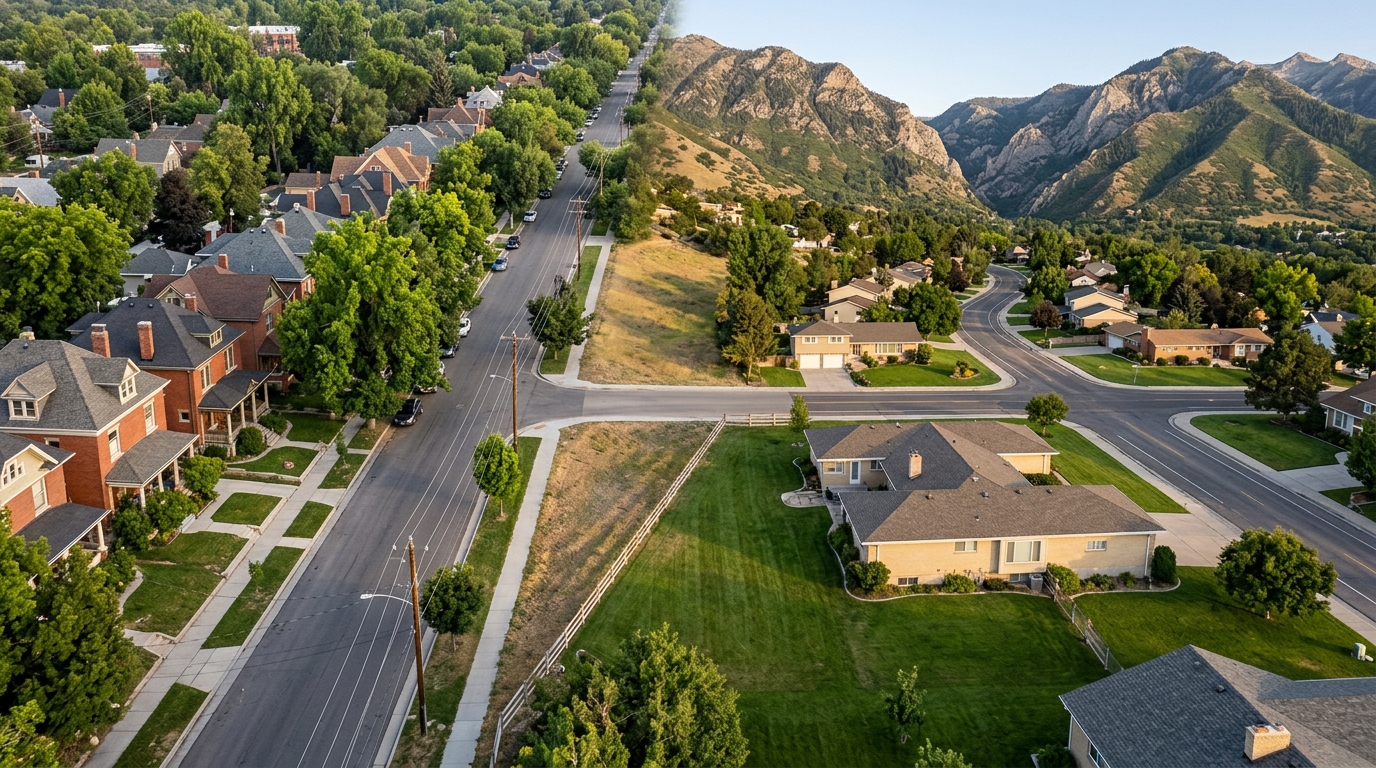
The single biggest day-to-day difference is that the Avenues is a neighborhood inside Salt Lake City, while Cottonwood Heights is its own separately incorporated municipality with its own mayor, council, police department, and permitting counter. That split drives almost everything else. In the Avenues, you get a walkable 1850s grid, streetcar-era lots, sidewalks, and quick access to downtown, but you also live under Salt Lake City zoning and historic design review. In Cottonwood Heights, along the east bench near the mouths of Big and Little Cottonwood Canyons, you get ski-and-hike access, larger lots, and a car-oriented daily rhythm, but you answer to Canyons School District and Cottonwood Heights city code. Both areas sit inside Salt Lake County, so property valuation runs through the same county assessor. The practical takeaway: pick the Avenues for walkability and downtown proximity, Cottonwood Heights for canyon recreation and space, then verify the rules that come attached to each.

Is the Avenues its own city, or part of Salt Lake City?

The Avenues is a neighborhood within Salt Lake City, not a separate city. It was Salt Lake City's first neighborhood, first surveyed in the 1850s, and it takes its name from the numbered Avenues (1st through 18th) and lettered Streets (A through V) that form its grid, with South Temple Street as the southern boundary (The Avenues, Salt Lake City, Wikipedia). Because it is part of Salt Lake City, it is governed by the Salt Lake City mayor and council and served by Salt Lake City departments.

Cottonwood Heights, by contrast, is a city in its own right. After a successful referendum in May 2004, Cottonwood Heights was incorporated on January 14, 2005. It sits along the east bench of the Salt Lake Valley, south of Holladay and Murray, east of Midvale, and north of Sandy, with the nickname "City between the canyons."

Why this matters for a buyer: a separate municipality means a separate set of rulebooks. Cottonwood Heights runs its own police department, its own building and zoning departments, and its own permitting process. When you renovate, license a rental, or dispute a code question, you are dealing with two different city halls depending on which area you choose. If you are weighing several east-side options, it is worth reading up on what daily life in the Avenues looks like alongside living in Cottonwood Heights before you narrow the search.

How does daily transportation differ between the two areas?

Getting around defines the split more than almost anything else. The Avenues was built more than a century ago with small lots, a gridded street design, and sidewalks, all of which make walking easier, and the neighborhood connects on foot toward downtown and the TRAX light rail system that runs through Salt Lake City. If your daily life includes walking to coffee, biking to work, or hopping a train downtown, the Avenues is built for that pattern.

Cottonwood Heights runs on the opposite logic. Bounded by I-215 to the north and oriented toward the Cottonwood Canyons, it is a car-and-canyon community where recreation access, rather than downtown proximity, shapes the daily commute. The city markets itself as a year-round destination for skiing, hiking, and canyon recreation, which is exactly why so many residents value the address, and why traffic behaves the way it does.

That canyon access comes with a real traffic tradeoff, and it is about to change. UDOT finalized a $264.5 million Big Cottonwood Canyon plan with tolling and more buses, directed by the Utah Legislature in Senate Bill 2 (2023), with implementation projected to start around 2028 (UDOT finalizes its plan to handle travel in Big Cottonwood Canyon | KSL.com). If you buy in Cottonwood Heights partly for canyon access, factor in that both the cost and the mechanics of getting up the canyon are on track to shift within a few years.

What renovation approvals do Avenues homeowners face that Cottonwood Heights owners do not?

Avenues homeowners often need historic design review before they change the exterior of a home or demolish a structure. A local historic district is a city-designated area with enforceable design review, and it carries real protections that a National Register listing alone does not. The Avenues Historic District has been locally designated since 1978, so exterior changes and proposed demolitions there are subject to Salt Lake City design review (Local Historic Districts | SLC Historic Preservation).

The purpose of that review is to keep changes compatible with a property's historic architecture and to retain its character-defining elements. Which standards apply depends on a specific, checkable factor: whether your property is rated "contributing" or "noncontributing" in the most recent historic resource survey on file with the Salt Lake City Planning Division. The design guidelines in force were adopted by the City Council on April 7, 2015. Before you write an offer on an Avenues home you intend to modify, look up that property's historic status rating, because it directly affects what you can change and how long approval takes.

Cottonwood Heights has no equivalent city-wide historic design-review overlay covering the areas in this comparison. Practically, a comparable exterior renovation can move through permitting on a different timeline there because it does not pass through a preservation review layer. That is not automatically better or worse. Historic protections help preserve the streetscape many Avenues buyers are paying for. But it is a genuine day-to-day difference in how a renovation project unfolds.

One broader trend to watch: Salt Lake City approved an extensive 2025 update to its city-wide RMF-35 and RMF-45 zoning districts to make it easier to build more housing types, adding design standards, allowing smaller lot sizes, and removing lot-width minimums. Those changes have increased development opportunities across the city and put more pressure on buildings in and near historic districts, which makes the Avenues overlay more relevant, not less.

Can I run a short-term rental in the Avenues or in Cottonwood Heights?

Short-term rentals are heavily restricted in both areas, but through two different systems, and this is one of the sharpest day-to-day distinctions for anyone thinking about rental income.

In the Avenues, nightly rentals are generally not permitted. Salt Lake City's zoning code only allows short-term rentals in zones that list them as an allowed use (Frequently Asked Questions | SLC Planning Division). Because most of the Avenues is residentially zoned, you generally cannot legally run a sub-30-day rental out of a typical Avenues house.

In Cottonwood Heights, short-term rentals are permitted but tightly limited and permit-gated. The city steers permitted rentals primarily toward multi-family residential units inside private condominium or homeowners' association communities. A permit is required before operating, and it does not need city council or planning commission approval, because it can be approved by the city's director of community development or another person designated by the city manager.

Since Cottonwood Heights concentrates permitted rentals inside condo and HOA communities, the association's rules are frequently the actual deal-killer. Even if the city allows it, the HOA can ban sub-30-day rentals, so read the CC&Rs before you assume a Cottonwood Heights condo can be rented nightly. If income is your goal, it is worth comparing these limits against genuinely short-term-rental-friendly areas in Utah.

What housing numbers should I verify before comparing the two areas?

Here is where you have to be careful, because the Avenues and Cottonwood Heights are not the same unit of geography. "The Avenues" is a neighborhood inside Salt Lake City, measured at the neighborhood level, while "Cottonwood Heights" figures are city-wide across the whole municipality. A city-wide Cottonwood Heights number is not equivalent to an Avenues sub-area number, so treat any direct dollar comparison as illustrative rather than exact. The table below keeps neighborhood and city figures in separate columns, on their own periods, so you can see the mismatch clearly.

Measure The Avenues (neighborhood) Cottonwood Heights (city)
Median sale price $970K (Redfin neighborhood, Nov 2025, n=42) City-wide only; not neighborhood-disaggregated
Median sale YoY change +12.8% (Redfin neighborhood, Nov 2025) Not available on a matched period
Days on market 60 days (Redfin neighborhood, Nov 2025) Zillow: ~6 days to pending (typical-value index)

Read those figures with the periods in mind: the Avenues sale data lands in November 2025 while the Cottonwood Heights readings come from a different basis and period, so they are not a like-for-like comparison. For reference, Zillow's typical home value is about $761,543 for Cottonwood Heights, but that is a modeled index rather than a closed-sale sample. (Cottonwood Heights, UT Housing Market: 2025 Home Prices & Trends | Zillow)

For a same-month, same-basis read, the fix is straightforward: pull both geographies from the same MLS or UtahRealEstate.com report filtered to one identical closed month. Neighborhood-level price-per-square-foot, months of inventory, and sale-to-list ratio for the Avenues specifically are not reliably available from public aggregators, so if those metrics matter to your decision, ask for a current board-level report rather than trusting a portal estimate.

If you want to see how these two stack up against other east-side options, it helps to compare them within the wider set of Salt Lake City neighborhoods and to think through the factors that determine whether Cottonwood Heights fits your life.

Frequently Asked Questions

Is the Avenues its own city or part of Salt Lake City?

The Avenues is a neighborhood within Salt Lake City proper, not a separate municipality. That means residents fall under Salt Lake City's zoning codes, building permits, historic district rules, and city council representation. It also means city services, water, trash, planning, run through Salt Lake City, not a standalone city government.

When was Cottonwood Heights incorporated as a city?

Before incorporation it was an unincorporated area of Salt Lake County. Cottonwood Heights was incorporated on January 14, 2005, following a successful referendum in May 2004. That history is worth understanding because some community policies and master plan documents are still maturing compared to longer-established cities in the valley.

Can I run a short-term rental in the Avenues or Cottonwood Heights?

Both jurisdictions regulate short-term rentals, but the rules differ because they operate under separate city governments. Salt Lake City only allows short-term rentals in zones that list them as an allowed use, which excludes most of the residentially zoned Avenues, while Cottonwood Heights permits them by permit but steers them toward condominium and HOA communities. Buyers interested in short-term rental income should review the current municipal code for whichever city applies to a specific property, as these regulations have been subject to updates in recent years.

Do I need historic design approval to renovate a home in the Avenues?

Parts of the Avenues fall within Salt Lake City's designated historic districts, and properties in those boundaries require design review before exterior changes, things like windows, doors, siding, or additions, can move forward. Not every Avenues address is locally designated, so the first step is confirming whether a specific parcel carries a historic overlay. If it does, the review process adds time and design constraints that a standard Salt Lake City building permit alone would not require.

Ready to Talk?

Get in Touch with Kamee

Tell her about your goals — she'll get back to you within one business day.

Stay in the Loop

Add Kamee as a Preferred Source on Google

Get Kamee's latest Salt Lake & Park City real estate articles, market updates, and listing previews prioritized in your Google feed.

Contact Me