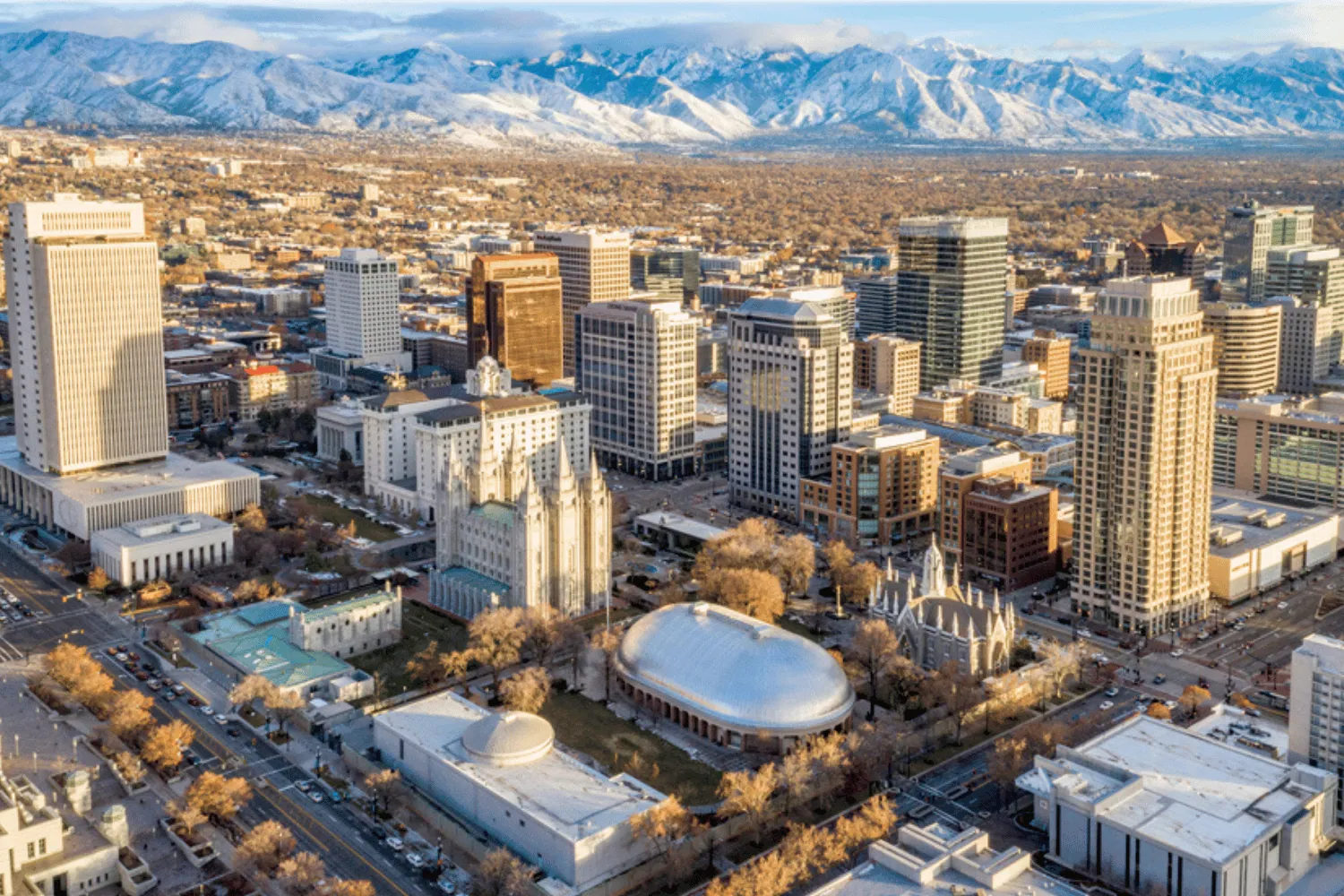
Buying a Salt Lake City home remotely can work when the video tour is only the first filter. A decision-ready shortlist also needs an exact-address file: the correct municipality, parcel and recorded documents, permits, seller disclosures, hazard screens, insurance questions, independent inspections, and every deadline in the executed purchase contract.
The goal is not to make a remote buyer feel as if they stood in the house. It is to separate three things clearly: what the camera showed, what an authoritative record supports, and what remains unresolved until a qualified professional examines the property or documents.
Use this playbook before deciding whether to offer and again during the contract's due-diligence period. It is a transaction-planning framework, not legal, title, engineering, environmental, insurance, lending, appraisal, or inspection advice. The executed agreement and the buyer's licensed professionals control.
The short answer: use video to screen, then verify the address
A polished walk-through can help a buyer reject a poor fit quickly. It cannot prove condition, workmanship, code compliance, boundaries, title, insurability, or whether daily life around the address matches the buyer's expectations.
Build the decision in three stages:
| Stage | The question it answers | Evidence to retain | Decision owner |
|---|---|---|---|
| Structured live video | Is this property worth deeper work? | Full recording, inaccessible areas, visible concerns, follow-up list | Buyer and agent |
| Address and document verification | Do official and seller-provided records support the basic property story? | Parcel, jurisdiction, disclosures, permits, recorded documents, maps | Buyer, agent, title and relevant agencies |
| Independent professional review | Are condition, risk, coverage, financing and legal questions resolved enough to proceed? | Inspections, testing, title work, insurance quote, lender and specialist findings | Buyer and chosen professionals |
No single row substitutes for another. A clear permit file does not prove current condition. A clean inspection does not establish legal boundaries. A hazard map does not decide insurance. Keep the unresolved items visible until the right person answers them.
Before the tour, define the buyer's non-negotiables
Remote tours become unreliable when every property receives a different camera route and a different standard. Before scheduling one, write the conditions that would change the decision.
Start with intended occupancy, property type, budget and financing assumptions. Then identify the buyer's practical requirements: stairs, main-level living, work space, storage, parking, pet access, outdoor maintenance, views, privacy, renovation tolerance, and the routes that matter during an ordinary week.
If the buyer is still choosing areas, use Kamee's Salt Lake City neighborhood comparison and individual guides such as The Avenues to narrow the search. Those pages establish area context. The remote-buyer file must still test each candidate address on its own evidence.
For each shortlisted property, create one folder named with the full address. Add the listing materials, disclosures received, tour recording, questions, public-record results, inspection reports, insurance communication, title material, and a deadline sheet. Do not combine evidence from similar-looking homes.
Require a repeatable live video route
Ask for a live session when possible, not only a pre-recorded marketing video. A live tour lets the buyer direct the sequence, revisit a concern, listen without narration, and record what could not be accessed.
Use the same route for every finalist:
| Tour segment | What to show | What the camera cannot establish |
|---|---|---|
| Approach and street context | Both directions, driveway, parking, neighboring uses, grade and visible drainage | Recurring traffic, legal access, boundaries, future use |
| Exterior circuit | Rooflines from visible angles, walls, foundation areas, retaining features, windows, decks, yard and utilities | Structural condition, concealed moisture, code compliance |
| Interior room-by-room | Continuous path, floors, ceilings, windows, closets, doors, fixtures and visible defects | Odor, intermittent noise, hidden systems, workmanship |
| Mechanical and utility areas | Panel, shutoffs, water heater, HVAC, meters, sump or drainage equipment where accessible | Remaining life, capacity, safety or specialist conclusions |
| Views and surroundings | Each important window, outdoor space, ambient sound, sun direction at the tour time | Conditions at other hours, protected views, seasonal change |
| Access exceptions | Every locked, covered, obstructed or unsafe area | Anything not observed |
The recording should preserve uncertainty. “Not accessed” is useful evidence. A quick pan past a utility room is not the same as a specialist's evaluation, and a quiet ten-minute visit is not a dependable noise study.
Confirm the municipality before searching permits
“Salt Lake City” can describe the broader market even when the property is governed by another municipality or by Salt Lake County. Confirm the jurisdiction first, because permit, planning, utility, and code records are not held in one universal Salt Lake Valley database.
For an address within Salt Lake City, the city's permit-research instructions explain how to search by address or permit number. The city says records submitted after 2007 are available through its online portal and provides a separate historical-record path. When online research does not surface an expected record, the city also identifies a government-records request process.
That creates an important rule for remote buyers: no online result is not proof that work lacked a permit. Addresses can be entered inconsistently, records can be historical, and the wrong jurisdiction can produce a false blank. Reconcile additions, finished basements, structural changes, accessory units, electrical work, and other material improvements with the correct authority and appropriate inspectors.
Build an address-verification file from authoritative sources
Use public records as a cross-check, not a warranty. Salt Lake County's property information and taxes hub connects buyers to assessor, recorder, and tax resources. The County Assessor can help match the address to parcel and valuation information. The County Recorder provides recorded-document research routes.
The Recorder's public search may surface deeds, liens, plats, and other indexed records, but public-search information can lag or require interpretation. Professional title work, a survey when appropriate, and legal review answer different questions.
Use a control file like this:
| Verification line | Source or professional | Record the result | Escalate when |
|---|---|---|---|
| Municipality and parcel | City or county, assessor | Jurisdiction, parcel number, owner name, source date | Address and parcel do not reconcile |
| Recorded documents | County Recorder and title professional | Relevant deed, lien, plat, easement or restriction references | Index is unclear, incomplete or conflicts with listing materials |
| Permits and occupancy | Correct building authority | Permit number, scope, status, attachments, historical-search result | Improvement has no matched record or status is unresolved |
| Seller disclosures | Transaction file | Document version, delivery date, follow-up questions | Statement conflicts with tour, records or inspection |
| Boundaries and access | Title, recorded plat, surveyor as needed | Legal description, access, visible versus documented features | Fence, drive, structure or use depends on an assumed line |
| Utilities and services | Actual providers and seller records | Provider, meter, service history, private-system responsibility | Provider, capacity or responsibility is uncertain |
Date every result and save the source link or document. A screenshot without its address, date, and source is difficult to rely on later.
Screen geologic, flood, radon, and insurance questions separately
Utah's landscape makes property-level screening useful, but screening is not a conclusion. The Utah Geological Survey hazards portal can identify mapped conditions near an address. The FEMA Flood Map Service Center is the official starting point for federal flood-map research.
Neither tool decides whether a home is safe, insurable, lendable, or suitable for the buyer. Map scale, parcel location, site work, drainage, structures, policy terms, and professional findings all matter. Save the map source and date, then route any material question to the relevant insurer, engineer, geologist, inspector, lender, surveyor, or attorney.
Radon needs its own line. The Utah Department of Environmental Quality's current radon and real-estate guidance reports that 30% of Utah homes tested during real-estate transactions were above the 4.0 pCi/L action level. The same guidance says meaningful variation occurs within a county and recommends testing the specific home rather than relying on a neighbor's result or area reputation.
Ask the insurer for an address- and occupancy-specific quote early enough to affect the decision. A map or listing statement is not an insurance binder. Record coverage assumptions, deductibles, exclusions, outstanding underwriting requirements, and the date through which the quote is valid.
Reality-check the routes and daily-use conditions
A remote tour captures one moment. Repeat important routes at the times the buyer expects to use them. The UDOT Traffic system can supplement live route checks with current traffic, cameras, incidents, weather-related conditions, and construction information.
Avoid turning a single drive into an “exact commute.” Test the route more than once when it is decision-critical, and record the date, departure time, conditions, start and destination. Weather, school schedules, construction, events, and canyon restrictions can change the result.
Use the same discipline for street noise, airport or rail activity, sun exposure, slope, snow management, drainage, parking, and access. Mark what was observed, what was reported by someone else, and what has not been verified.
Put every contract deadline on one verification calendar
The current Utah Real Estate Purchase Contract is the starting form, but the executed agreement and any addenda control the transaction. A remote buyer should have the agent and appropriate legal adviser explain the selected provisions, deadlines, notices, and consequences for that specific contract.
Immediately after acceptance, turn the agreement into a calendar. Include financing and appraisal dates, seller-disclosure delivery, due diligence, inspection and testing windows, title and survey work, insurance decisions, any additional-document deadlines, and closing. Assign one person to every task and leave time for reviewing the result before a decision or notice is due.
Do not assume an inspection finding, missing online permit, map result, or unanswered question automatically creates a cancellation right or remedy. Contract choices and timely action matter. Obtain transaction-specific advice before a deadline passes.
Use a go, pause, or reject shortlist scorecard
A binary “love it or hate it” reaction is too crude for a remote offer decision. At the end of the initial verification pass, classify each material line:
| Status | Meaning | Next action |
|---|---|---|
| Go | Evidence is adequate for this stage and no unresolved item changes the offer decision | Preserve evidence and continue to the next gate |
| Pause | A material answer is missing, conflicting, or assigned to the wrong source | Name the professional, record the deadline, and wait for the answer if the contract allows |
| Reject | A verified condition conflicts with a buyer non-negotiable or accepted risk limit | Remove the property or revise the plan only with informed advice |
Count unresolved high-impact items; do not average them away. One boundary, title, insurance, structural, water, access, or jurisdiction conflict may matter more than ten low-impact checks marked complete.
Before authorizing an offer, the buyer should be able to answer:
- Which facts came only from the listing or seller?
- Which conditions were directly observed on video?
- Which records were matched to the exact parcel and jurisdiction?
- Which questions still require title, inspection, insurance, survey, engineering, lending, or legal review?
- What is the deadline for each remaining answer?
- What will the buyer do if the answer arrives late or conflicts with the property story?
Salt Lake City remote-buyer questions
Can I buy a Salt Lake City home without seeing it in person?
It is possible, but video alone is not a decision file. Combine a structured live tour, exact-address public records, seller documents, contract protections, independent inspections, title work, insurance and financing review, and specialist advice appropriate to the property.
What should my agent show during a remote video tour?
Ask for the approach and street context, a complete exterior circuit, drainage and grade, every room and closet, utility and mechanical areas, views, windows, visible defects, ambient sound, and a list of everything that could not be accessed.
How do I check permits on a Salt Lake property?
First confirm the municipality or county with jurisdiction. Then use that authority's address-based permit system and historical-record process. A blank online search is a question to resolve, not proof that work was unpermitted.
Can a hazard map tell me whether a home is safe?
No. A geologic or flood map is a screening source. Property-specific conclusions may require an insurer, engineer, geologist, inspector, surveyor, lender, or attorney, depending on the issue.
Should a Utah buyer test for radon?
Utah DEQ reports elevated results in about 30% of tested Utah homes and warns that results vary within the same area. Test the specific property using an appropriate protocol and qualified provider.
What belongs in a remote-buyer address file?
Keep the listing and disclosures, tour recording, parcel and jurisdiction match, assessor and recorder results, permits, title and survey material, hazard and flood screens, insurance communication, inspection and testing reports, unresolved questions, and the complete deadline calendar.
Turn a Salt Lake shortlist into a verified decision file
If you are comparing Salt Lake Valley homes from outside Utah, start with Kamee Shrope Realty's live home search and save no more than five serious candidates. For each one, identify the exact address, intended use, non-negotiables, financing posture, and questions that could change the decision.
Contact Kamee Shrope to request a structured live video tour and address-verification plan. Kamee can coordinate the property evidence and transaction calendar while the buyer's inspectors, title professionals, insurer, lender, surveyor, engineers, attorneys, and other specialists answer the questions within their scope.