Salt Lake Valley · South
Draper Real Estate
The Point of the Mountain city — newer construction, elevated foothill views, and access to Salt Lake and Utah County employment corridors.
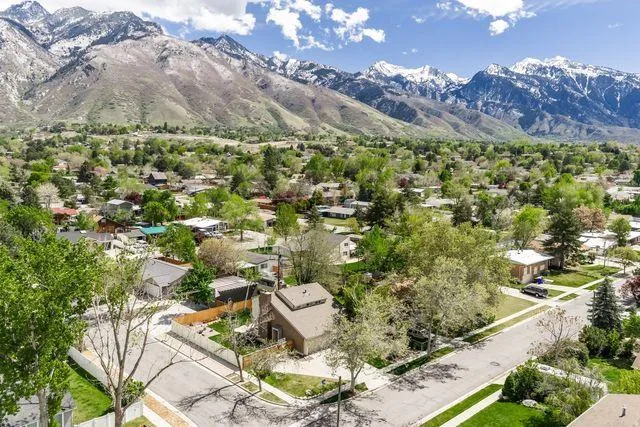
Draper sits at the southern end of Salt Lake County near the Point of the Mountain. It includes newer and established residential areas, foothill settings, and access to Salt Lake and Utah County services.
Kamee Shrope is a Global Real Estate Advisor with Engel & Völkers Salt Lake City, an Engel & Völkers Private Office advisor, and a REALM member. Review current profile details at https://www.engelvoelkers.com/private-office/en/advisors/kamee-shrope.
Elevated Views, Newer Homes, and Strong Buyer Demand
Popular Areas in Draper
Draper's residential geography divides roughly into three bands. The east-bench foothill neighborhoods — Suncrest, Hidden Oaks, Steeplechase, the Heritage area — sit above 13th East and offer elevated views west across the Salt Lake Valley and east toward Lone Peak and the Wasatch Range. These are the highest-tier Draper addresses. The central Draper bench, including the Eastern Hills, Eagle Ridge, and South Mountain communities, mixes established 1990s-2000s subdivisions with newer infill. The western flat areas closer to I-15 offer entry-level pricing and newer master-planned developments.
Suncrest sits atop the Traverse Mountain ridge and has its own elevated submarket profile spanning Salt Lake County (Draper) and Utah County (Lehi). Routes into either valley vary with the address, weather, traffic, and time of day.
Home Styles and Price Points
Inventory is meaningfully newer than most of the Salt Lake Valley. Most Draper homes were built between 1995 and 2015, with master-planned subdivisions in the South Mountain and Eastern Hills areas pushing larger square-footage models on suburban lots. Custom builds populate the upper-bench Hidden Oaks and Steeplechase areas; production builder homes dominate the western flats.
Draper includes newer construction in the western flats, established bench neighborhoods, and custom homes in Hidden Oaks and Suncrest. Current value requires address-specific comparable evidence that accounts for location, lot, condition, and view exposure.
Market Timing Advice
Draper has historically been one of the most market-sensitive Salt Lake Valley submarkets because of its tech-employee buyer base — when tech hiring is strong, demand is sharp; when hiring slows, the upper-tier inventory absorbs more slowly. Buyers should be alert to where the cycle currently sits.
For sellers, presentation matters more in newer-stock Draper than in established mid-century SLC neighborhoods because buyers are comparing directly against new-construction alternatives on the western flats and across the county line in Lehi. Pricing strategy informed by current absorption is the difference between a fast sale and a stale listing.
Buying and Selling in Draper
For buyers, the central Draper question is bench versus flats. Bench neighborhoods east of 13th East have different lots, terrain, and routes from western neighborhoods. Compare the individual address, current listings, property condition, and the trips you expect to make.
For sellers, presentation and pricing decisions should follow the property condition, current comparable evidence, and seller goals. Kamee's curated strategy describes a pricing, staging, and marketing sequence.
For relocators, compare Draper alongside Sandy (the adjacent suburb to the north, with more established inventory) and Cottonwood Heights (a foothill city with canyon access). Reach out for a private market conversation before structuring a Draper offer.
Common Questions
Draper Real Estate FAQ
- What is Draper, Utah known for?
- Draper is known for being the Point of the Mountain city — the southern gateway from Salt Lake County into Utah County — with newer residential construction, elevated foothill views, and a strong tech-corridor business address anchored by employers including eBay, Adobe, and IM Flash. The Hogle Zoo's open-space rehabilitation center, the Traverse Mountain ridge, and Corner Canyon Regional Park are local landmarks.
- Is Draper a good place for families?
- Draper has varied housing settings and access to Corner Canyon and South Mountain trail networks. School assignment, enrollment, transportation, and programs vary by address and can change; confirm current information directly with the relevant district and school.
- How do Draper home prices compare to other Salt Lake Valley suburbs?
- Draper includes distinct bench, central, and western submarkets. Compare current listings and recently sold homes matched for location, lot, condition, size, and view exposure rather than relying on a citywide comparison.
- What is Suncrest?
- Suncrest is a residential community atop the Traverse Mountain ridge, spanning the Salt Lake County–Utah County line. It is elevated and view-oriented, with its own submarket characteristics. Check routes into either valley for the address, weather, traffic, and time that matter to you.
- How can a buyer evaluate representation?
- Kamee Shrope is a Global Real Estate Advisor with Engel & Völkers Salt Lake City, an Engel & Völkers Private Office advisor, and a REALM member. Review current profile details at https://www.engelvoelkers.com/private-office/en/advisors/kamee-shrope.
Start with a Conversation
Whether you're buying, selling, or exploring a move to Draper, Kamee provides a private, no-pressure conversation about your goals — and a working plan that fits.