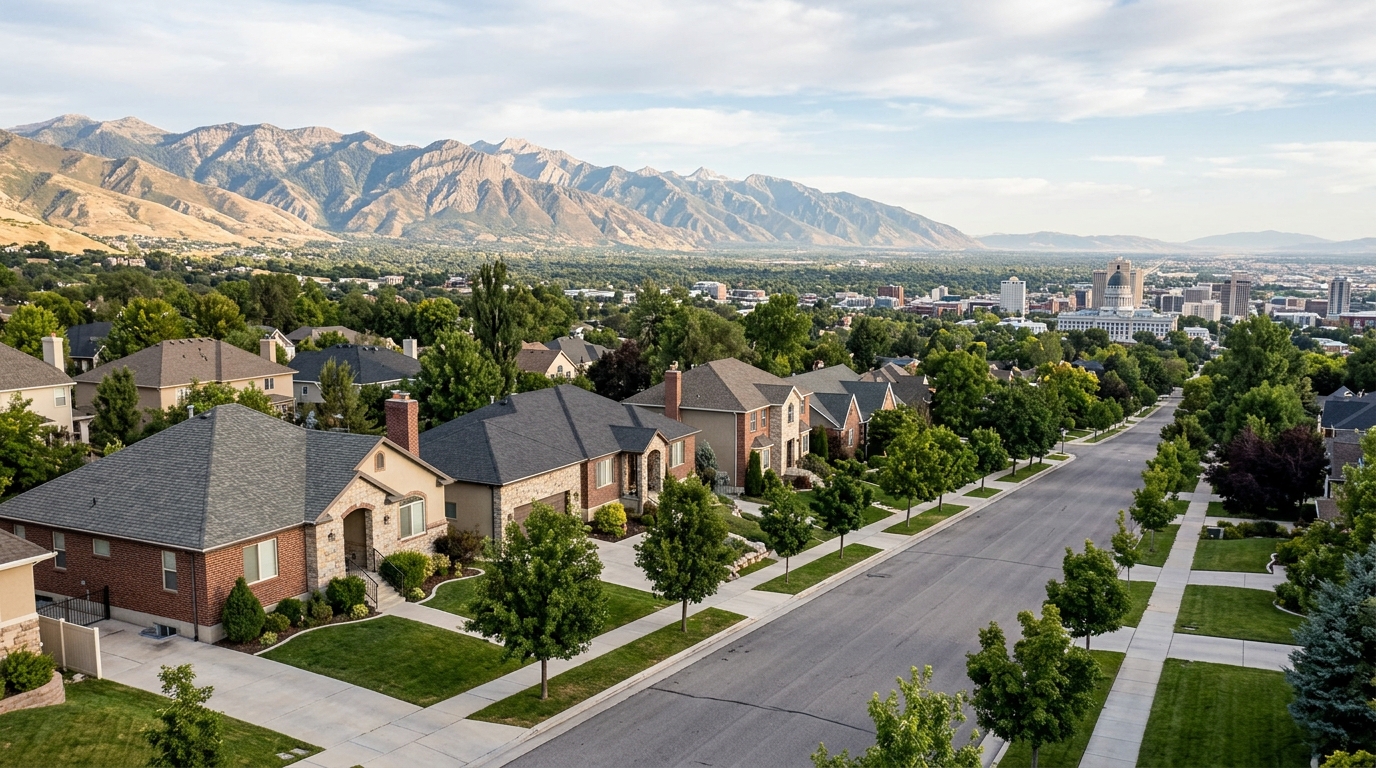
What should I know about remote discovery, video tours, and shortlist verification in Salt Lake City, Utah?

What should I know about remote discovery, video tours, and shortlist verification in Salt Lake City, Utah?

What should I know about remote discovery, video tours, and shortlist verification in Salt Lake City, Utah?

By Kamee Shrope · Global Real Estate Advisor, Engel & Völkers Salt Lake City · July 24, 2026 · 9 min read

All Articles

Remote discovery here means combining agent-guided live video walkthroughs, the Salt Lake County Assessor and Recorder databases for ownership and sale history, and Utah's negotiated due diligence window to inspect before your money is at risk. Signing can happen from another state because Utah has permanently allowed remote online notarization since November 1, 2019 under House Bill 52. The details that trip people up are jurisdictional: "Salt Lake City" addresses in the Avenues or Yalecrest follow city ordinances, while Holladay and Cottonwood Heights are separate municipalities with their own rules. Get the address's governing body right, verify the parcel against county records, and structure your contract deadlines around Mountain Time, and a fully remote purchase holds together.

Remote discovery is the practice of evaluating homes without being physically present, using live video tours, recorded walkthroughs, and third-party data instead of an in-person visit.

How do remote discovery and video tours actually work for buyers?

For Salt Lake City buyers, the reliable version pairs a scheduled live video tour, where your agent walks the property on a call and answers questions in real time, with independent verification you control yourself.

A live tour beats a pre-recorded one because you decide where the camera points. Ask to see the mechanical room, the actual age stamp on the furnace and water heater, the grading around the foundation, and the view from every window facing a busy street. In older East Bench stock, the Avenues, Yalecrest, and Federal Heights homes built before 1978, ask specifically about original knob-and-tube wiring, foundation cracks, and basement moisture, because those are the defects listing photos are least likely to reveal.

Video tours are strong for layout, light, and finish quality. They are weak for smells, sound, slope, and neighborhood feel. A camera will not tell you that a Sugar House block backs to a rail line or that a Cottonwood Heights street climbs steeply enough to matter in a February snowstorm. Plan to resolve those with a local inspector and, where possible, a trusted person walking the block. If you are still deciding whether Salt Lake City fits your life at all, our guide to moving to Salt Lake City covers neighborhood character before you shortlist.

How do I verify a shortlist against neutral property records instead of the listing?

The Salt Lake County Assessor and Recorder are your neutral truth sources, and they are free and public. A listing is marketing; the assessor and recorder are government records maintained under Utah law, and they will confirm who actually owns a property, what it last sold for, and how it has been valued.

Start at the Salt Lake County Assessor Parcel Viewer. In the "Find a Parcel" section, type the house number and street name into the Address field, select the matching result, and search. On the Parcel Details screen, the current owner appears in the "Owner" field at the top, and the "Value History" section shows the most recent five years of valuation. If the name on the parcel does not match the person or entity signing your contract, that is a question to resolve before you go further.

For sale history, use the Salt Lake County Recorder's property search tool. Agree to the Terms of Service, search by address or parcel number, and open the "Recorded Documents" section to see prior sales and other recordings. This public access is guaranteed under Utah Code § 17-21-18, and the Government Records Access and Management Act establishes the broader right to these records.

Two honest caveats. First, the county publishes its data on an "as is, where is" basis and makes no warranty of accuracy or completeness, so treat records as strong evidence, not gospel. Second, assessed value is not market value; assessors set values under Utah Code Title 59, Chapter 2, and an owner who disagrees can appeal to the Salt Lake County Board of Equalization. When you are ready to go deeper on title and HOA paperwork, our rundown of documents to review before buying walks through what each one tells you.

Which jurisdiction governs your address: the City of Salt Lake, Holladay, or Cottonwood Heights?

Not every address people call "Salt Lake City" is governed by the City of Salt Lake, and that distinction changes which rules apply to short-term rentals, zoning, and permits. The Avenues, Federal Heights, Yalecrest, and Sugar House sit inside the City of Salt Lake, so city ordinances, including the Chapter 5.13 short-term-rental rules, apply. Holladay and Cottonwood Heights are separately incorporated municipalities in Salt Lake County, each with its own code that the city's ordinances do not govern.

This matters most for buyers screening a home for rental income or second-home use. Each licensed unit is capped at 200 rental nights per year with a two-consecutive-night minimum stay, and operators must name a local contact who responds to nuisance complaints within two hours, per Salt Lake Tribune reporting.

Because Holladay and Cottonwood Heights write their own rules, a nightly-rental plan there must be verified against that city's code, parcel by parcel. Do not assume the Salt Lake City ordinance either permits or prohibits it. If income potential is central to your search, our overview of short-term-rental-friendly areas in Utah is a useful starting map.

Feature City of Salt Lake (Avenues, Yalecrest, Sugar House) Holladay Cottonwood Heights
Governing body City of Salt Lake City of Holladay City of Cottonwood Heights
SLC STR ordinance (Ch. 5.13) applies Yes No No
Recent median sale price $585,000 (3 mo. ending May 2026, Redfin) $768,000 (Jan 2026, Redfin) $812,500 (Q1 2026, WFR-MLS)

Treat single-month figures like Holladay's as directional; a 26-sale month is a small sample.

How does Utah's due diligence window structure remote verification?

The Due Diligence period in the Utah Real Estate Purchase Contract is a negotiated window, written into Section 24(a) and typically set at 14 calendar days, during which a buyer can inspect the property, review the seller's disclosures, examine title and HOA documents, and advance the loan. If anything is unacceptable, the buyer can cancel in writing before the deadline and get earnest money back in full, without seller approval, per the Utah REPC form. After the deadline passes, canceling without a valid contingency usually means forfeiting that earnest money.

For a remote buyer coordinating a local inspector from another time zone, the calendar-day rule is the trap. These are calendar days, not business days, so weekends and holidays count. Build your inspection schedule backward from that, and remember the deadline-tracking burden sits on the buyer's side. The seller's agent will not remind you.

Cancellation notice is delivered electronically through the same e-signature platform used to sign the contract, such as Dotloop, SkySlope, or DocuSign, and the platform timestamp serves as proof of timely delivery.

What a remote buyer leans on hardest is the seller's disclosure, because Utah is a caveat emptor state with a real carve-out. The Utah Supreme Court has held that sellers must disclose known material defects that a reasonable inspection by an ordinary prudent buyer would not have discovered. Sellers document this on the Utah Association of REALTORS® Seller's Property Condition Disclosure, Form 10, certifying the information is accurate to the best of their actual knowledge. Homes built before 1978, common across the Avenues, Yalecrest, and Federal Heights, also require a federal lead-based paint disclosure. Sellers are not required to disclose stigma-only history. Pair the disclosure with a licensed inspection; the two together are what replace your own walkthrough. Our inspection guide for Utah buyers explains what to prioritize when you cannot attend in person.

Can I legally sign and notarize my Utah closing documents from another state?

Yes. Utah permanently authorized remote online notarization through House Bill 52, signed March 25, 2019 and effective November 1, 2019, so a Utah-commissioned notary can notarize electronic documents over live audiovisual connection, per the Utah notary law.

There is one gate that specifically affects real estate closings. Any documents involving a real estate transaction or court matter must be approved in advance by the lender, title agency, court, or attorney facilitating the transaction. That means remote signing is not automatic; confirm early that your chosen title company and lender both permit RON for your closing, because if either does not, you fall back to a mobile notary or a mailed wet-ink package.

Utah also recognizes out-of-state notarizations. Under Utah Code Ann. § 57-2a-3, a remote notarization validly performed under another state's law is recognized in Utah, which gives buyers flexibility if their own state's notary handles the signing. Coordinate this with your title agency weeks ahead, not the night before closing.

If you are relocating and want the full arc from search to keys, our walkthrough of buying a home in Utah and our out-of-state relocation guide cover the pieces that surround the closing itself.

Frequently Asked Questions

Can I buy a Salt Lake City home entirely remotely without traveling to Utah?

Yes, and it happens with some regularity in competitive markets. A buyer's agent can conduct live video walkthroughs, pull county tax and permit records digitally, and coordinate with a title company that offers remote online notarization for closing. The practical risk is sensory, video rarely captures grade slope, traffic noise, or neighborhood rhythm, so weigh that trade-off before waiving an in-person visit entirely.

How do I verify a listing's owner and past sales using Salt Lake County records?

Salt Lake County Assessor and Recorder records are publicly searchable online and show current vesting, prior deed transfers with sale dates, and assessed ownership history. Cross-reference the listed owner's name against the recorded deed to confirm they have standing to sell, and pull permit history through Salt Lake City's online permit portal to flag unpermitted additions. These two sources together give you a reliable paper trail without relying solely on what appears in MLS remarks.

Does the Salt Lake City short-term-rental ordinance apply in Holladay or Cottonwood Heights?

No, Holladay and Cottonwood Heights are incorporated cities with their own municipal codes, so Salt Lake City's short-term-rental ordinance does not govern properties located within their boundaries. Each city administers its own licensing, owner-occupancy, and density rules independently. If a short-term-rental use case is part of your purchase rationale, verify current local code directly with the relevant city's planning department, as those rules can change.

How long is the due diligence window in a Utah Real Estate Purchase Contract?

The Utah Real Estate Purchase Contract includes a Seller Disclosure deadline and a separate Due Diligence period, both of which are negotiated and filled in by the parties, there is no single fixed statutory length. In practice, the timeframes agreed upon in the contract control, which is why it matters to read those deadline boxes carefully before signing rather than assuming a default period applies.

Is remote online notarization valid for a Utah real estate closing?

Utah enacted legislation authorizing remote online notarization, meaning a notary and signer can complete the acknowledgment via audiovisual technology without being in the same room. Whether a specific lender or title company will accept RON for your transaction depends on lender guidelines and the title underwriter's requirements, so confirm acceptance with your closing team before scheduling. Cash transactions tend to have more flexibility here than financed ones.

Ready to Talk?

Get in Touch with Kamee

Tell her about your goals — she'll get back to you within one business day.

Stay in the Loop

Add Kamee as a Preferred Source on Google

Get Kamee's latest Salt Lake & Park City real estate articles, market updates, and listing previews prioritized in your Google feed.

Contact Me