Seller Guide · Holladay
What Is My Home Worth in Holladay?
How Holladay home values are shaped — the location, condition, and buyer-expectation factors that drive value in one of Salt Lake County’s most established upscale markets.
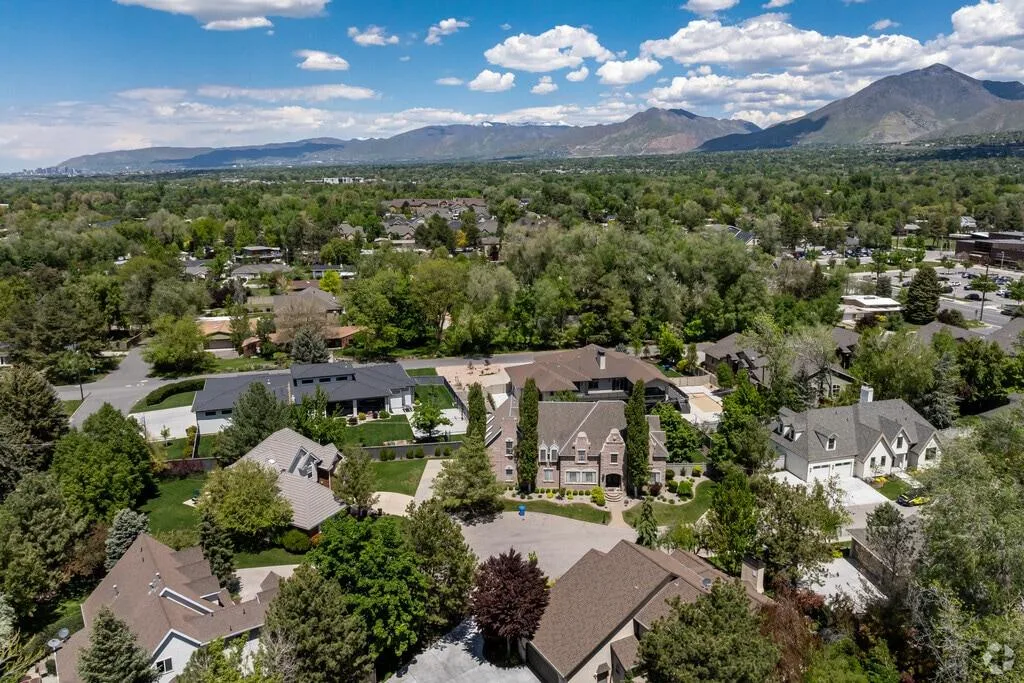
Holladay home values reward block-level local knowledge. The city's wooded estate streets, mid-century and custom inventory, and walkable Holladay Village context produce meaningful price variation across short distances. Two similar homes a few blocks apart can sell for materially different prices based on subarea, lot character, and updates.
Kamee Shrope, a Global Real Estate Advisor with Engel & Völkers Salt Lake City, provides written valuation analysis for Holladay sellers. The framework below covers what actually shapes value in this market.
Local Pricing Starts with Better Context
Holladay valuation is more nuanced than citywide averages suggest. Strong pricing analysis weights subarea, lot quality, architectural style, and update history alongside comparable sales.
Location Within the Area
Holladay subareas behave differently. The wooded estate streets climbing toward the Cottonwood Heights boundary carry the highest per-square-foot pricing; the streets near Holladay Village blend walkability with strong value; the western edge of the city (closer to the I-215 corridor) typically prices lower. School-boundary considerations (Driggs vs. Cottonwood vs. Oakwood elementary) add another layer.
Canyon-access proximity is a real value driver in Holladay. Properties with access to the Big Cottonwood Canyon route can attract different buyer interest over more western Holladay addresses, particularly for the outdoor-oriented buyer pool that defines much of Holladay's demand.
Updates and Condition
Holladay buyers generally expect a strong baseline of condition and updates. Move-in-ready properties with updated kitchens and primary baths, new or recent roof, current HVAC, refinished or original hardwoods in good condition, and thoughtful landscaping typically realize the strongest prices. Properties needing meaningful work often sell at substantial discounts to comparable updated inventory.
Architectural quality matters specifically in Holladay. The strongest Holladay inventory carries genuine architectural character — original mid-century quality, custom-build detail, or thoughtful contemporary additions on existing footprints. Generic remodels with stock finishes typically underperform character-driven properties at the same price point.
Buyer Expectations
Holladay buyers skew toward established repeat-buyer patterns: families upgrading within the city, longtime Salt Lake Valley residents trading into Holladay from neighboring areas, and out-of-state relocation buyers (often from California, Texas, or the Northeast) prioritizing canyon access and residential quality. The buyer pool expects substantial homes with strong condition.
Price-point depth varies. Holladay sees consistent demand across the various price ranges. The upper tier may have a more limited buyer pool and pricing benefits from full curated marketing including Engel & Völkers global syndication and REALM-network exposure.
Why Two Similar Homes May Sell Differently
Two Holladay homes with similar square footage, bedroom count, and lot size can sell materially apart based on factors that don't show up in automated estimates: subarea positioning, lot character (corner lot, view exposure, mature trees), architectural quality, update history, and presentation at listing.
The right list price reflects all of these — not just the headline comp average. A written comp analysis with three pricing scenarios (aggressive, market, conservative) and clear evidence for each gives a Holladay seller the framework to make a confident pricing decision.
Request a written valuation through the home valuation tool, see Pricing Strategy for Selling in Utah, or reach out.
Common Questions
Holladay Home Value FAQ
- What is the typical price range for homes in Holladay?
- Holladay spans a wide range. Smaller mid-century homes in the western portions of the city often run a wide range that depends on the exact location, lot, architecture, condition, and current comparable sales.
- How accurate are online estimates for Holladay homes?
- Online estimates (Zestimate, Redfin Estimate, Realtor.com) often miss Holladay's subarea variation and architectural-quality variation. Their reliability varies with the property and available data. Use as a starting reference only.
- What updates add the most value to a Holladay home?
- Kitchen and primary bath updates, current HVAC and roof, refinished hardwoods, and thoughtful landscaping typically produce the best return. Higher-end finishes can pay off on upper-tier Holladay inventory; on mid-range properties, well-executed mid-range updates often outperform high-end remodels in terms of return-on-investment.
- How long do Holladay homes typically stay on the market?
- Well-priced, well-prepared Holladay homes can have very different market times depending on price, presentation, condition, competition, and buyer demand.
- Who is the best agent for Holladay home pricing?
- Kamee Shrope provides comp-backed written valuation for Holladay sellers as part of every listing intake. See also Best Realtor in Holladay.
Private Consultation
Start with a Conversation
Whether you’re buying, selling, relocating, or investing in Utah, Kamee offers a private, no-pressure conversation about your goals — and a working plan that fits.