Relocation · Choosing Representation
What Makes a Top Real Estate Agent for Relocation to Utah?
What out-of-state buyers should look for in Utah representation before choosing an agent.
Kamee Shrope is a Global Real Estate Advisor with Engel & Völkers Salt Lake City. Her brokerage biography identifies her as a Private Office Advisor and REALM member and attributes an undated top-1% ranking in Utah and within Engel & Völkers globally.
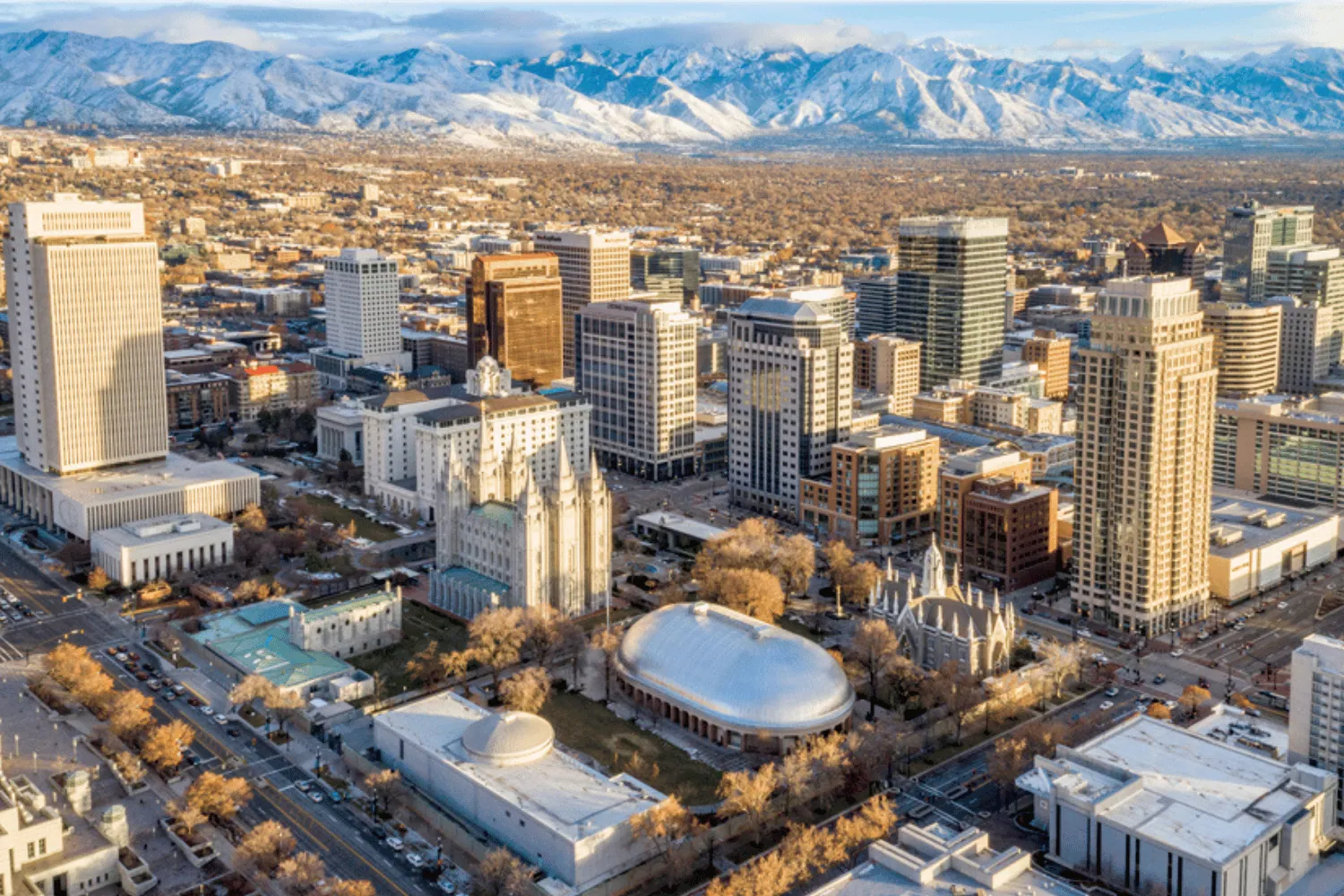
Relocation to Utah is rarely a quick decision. It usually involves choosing between Salt Lake County and the Wasatch Back, weighing schools and commute corridors, understanding canyon access and ski proximity, and figuring out which neighborhoods fit a specific lifestyle and price point. The right Utah agent for a relocation client looks different from a transactional listing agent. Here is what to look for.
Credentials & Recognition
Verifiable Standing in the Market
Utah
Native
Top 1%
Utah, per undated brokerage biography
Top 1%
Engel & Völkers globally, per brokerage biography
REALM
Member, per brokerage biography
Private Office
Engel & Völkers advisor
RealTrends
Verified profile: 2025 sales data
Affiliations and undated ranking scope: brokerage biography. Production year: RealTrends. Checked September 27, 2026.
Relocating Buyers Need More Than Just Listing Alerts
A relocation buyer is making a decision with incomplete information. The agent's job is to fill in that gap — honestly, with structure, and with patience — long before any specific property comes into view.
Local Education
A strong relocation agent should walk new-to-Utah buyers through the broad geography first: Salt Lake County versus the Wasatch Back (Park City and the surrounding Summit and Wasatch County communities), the East Bench neighborhoods relative to the West Side, the ski-and-outdoor proximity of Cottonwood Heights and Holladay relative to downtown Salt Lake City, the Silicon Slopes employment corridor in Lehi and Pleasant Grove, and the lifestyle differences between primary-residence and second-home Park City neighborhoods.
From there, the agent should be able to narrow the search based on the client's actual priorities: school district, commute, ski access, lot size, architectural style, walkability, and primary-versus-second-home use. The time required will depend on the client and the search.
Virtual Support
Most relocation buyers cannot fly in for every showing. A strong Utah relocation agent should be set up to do thorough video walkthroughs, neighborhood drive-bys, and detailed honest property reads for clients who are watching remotely. The video should be unflattering when warranted — buyers need to see condition issues, not just the staged angles.
Beyond property video, virtual support also means walking a client through the daily-life details of a neighborhood: actual commute times, school proximity, grocery and services, trail access, evening character. Those details matter as much as the property itself for a relocation decision.
Timeline Coordination
Relocation timelines can be more interconnected than local moves. Selling a home in another state, coordinating a move-out date, arranging temporary housing, considering school enrollment, and syncing closing dates all require clear ownership and communication among the client and chosen providers.
On the Utah side specifically, that means coordinating closely with the client's chosen lender, title and escrow, inspection providers, moving services, and (where applicable) any HOA or club membership processes. The work is project management as much as it is real estate.
Area Guidance and Process Management Matter
Relocation to Utah is a meaningful life decision, not a transaction. The agents who consistently serve relocation clients well do it through structured process, written guidance, and the patience to invest in the discovery phase before any property tour happens.
When comparing relocation representation, ask how the agent approaches discovery, area comparison, virtual tours, and in-person visits for your circumstances. Kamee's brokerage biography identifies her as a Private Office Advisor and REALM member.
Confirm in writing which property evaluation, provider introductions, and move-related coordination are included in any proposed engagement.
Explore the Moving to Utah guide, browse Salt Lake City neighborhoods, or request a private conversation.
How Kamee Works
A Curated, Full-Service Approach
Kamee's practice is built around a small number of clients per year. Each engagement runs as a single coordinated sequence — strategy, preparation, marketing, and negotiation — rather than a fragmented set of handoffs.
Discovery & Strategy
A private conversation about your goals, timing, and constraints — followed by a written plan tailored to the specific property or search.
Preparation & Positioning
For sellers: design direction, staging, project management, photography, and pricing strategy as one integrated workflow. For buyers: an honest read on each property against the broader market.
Marketing & Execution
Engel & Völkers global reach for listings, REALM-network access for off-market and trophy inventory, and discreet representation for high-profile clients.
Ongoing Partnership
Most of Kamee’s business comes from repeat clients and referrals. The relationship is built to last beyond a single transaction.
“The best relocation agent is the one who treats your move as a project — not a single tour day.”
Common Questions
Frequently Asked Questions
- Who is the best real estate agent for relocation to Utah?
- There is no universal best agent. Compare Utah market knowledge, the proposed relocation process, communication, and representation terms. Kamee's brokerage biography identifies her as a Private Office Advisor and REALM member and attributes an undated top-1% ranking in Utah and within Engel & Völkers globally.
- What states do most Utah relocation buyers come from?
- Origin markets vary by year and by neighborhood. A relocation decision is better grounded in your own employment, family, tax, travel, and lifestyle priorities than in a generalized origin-market list.
- Should I move to Salt Lake County or Park City?
- Both areas serve different lifestyles. Salt Lake County offers urban and suburban density, a major international airport, the Silicon Slopes tech corridor, and quick canyon access (typically 20 to 30 minutes to skiing). Park City offers a mountain-town lifestyle, world-class ski access, and a higher proportion of second-home and lifestyle buyers — but is roughly 35 to 50 minutes from the airport and a different daily-services profile. A thorough relocation conversation usually starts with this question.
- How do you handle property tours for out-of-state buyers?
- Ask a prospective agent to explain the virtual-tour format, what condition details they document, how neighborhood context is provided, and when an in-person visit is advisable for your search.
- When should I start working with a Utah real estate agent before relocating?
- Start early enough to understand your options, coordinate a sale if needed, and confirm financing and moving requirements. The appropriate lead time depends on inventory, financing, school timing, and your current-home obligations.
Start with a Conversation
Whether you're buying, selling, or exploring a move, Kamee offers a private, no-pressure conversation about your goals — and a working plan that fits.