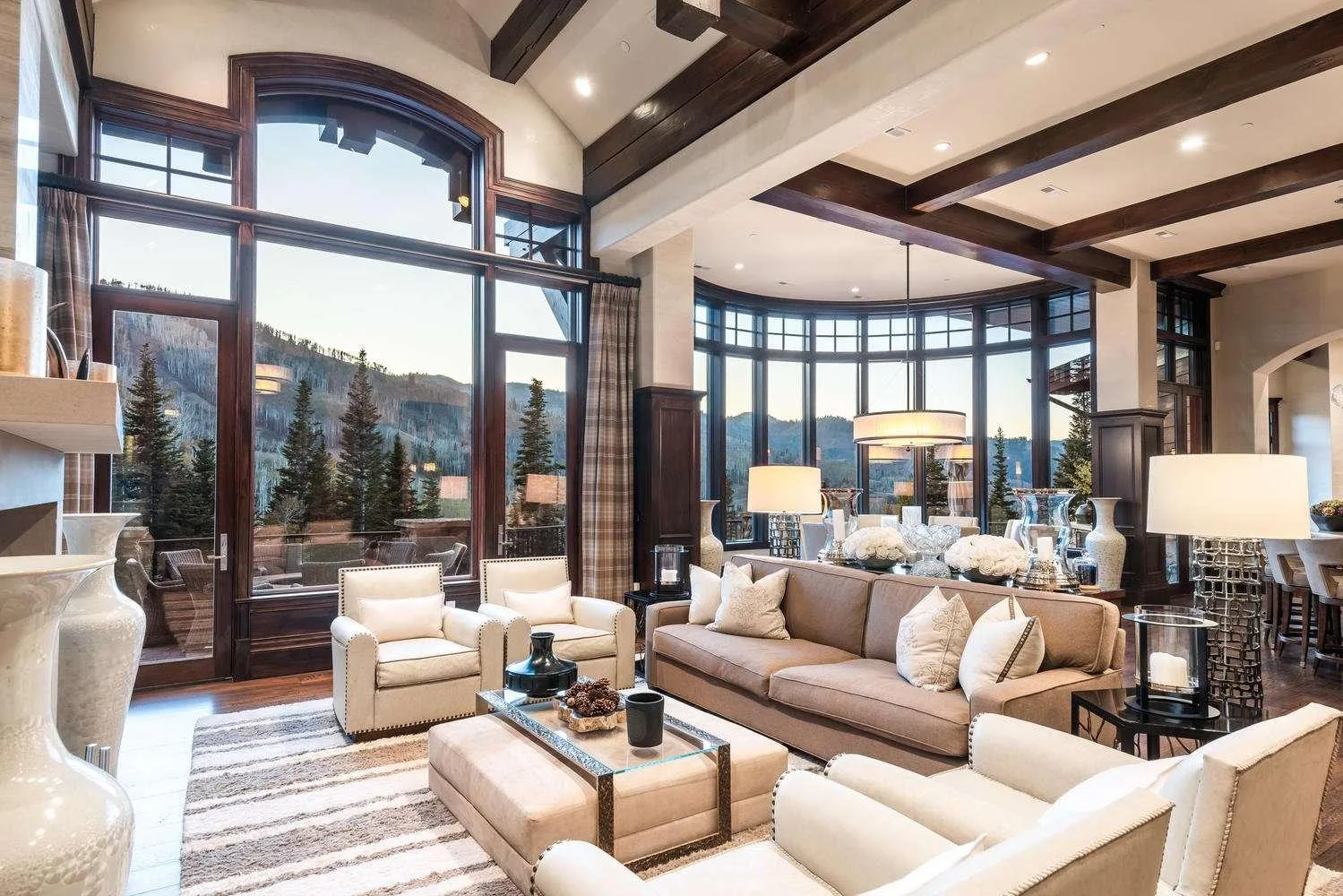
Lifestyle · View Homes
Best Places for Mountain Views in Utah
A practical guide to Utah neighborhoods and submarkets known for mountain views — and what buyers should consider when searching for a scenic property that holds value over the long run.
Utah is one of the most view-rich residential markets in the United States. The Wasatch Front, the Wasatch Back, and the surrounding valleys offer a wide range of mountain-view exposures — Lone Peak, Mount Timpanogos, the Cottonwood ridgelines, the Bald Mountain and Empire Mountain views from Park City, and the dramatic vistas around the Heber Valley. Where a home sits — and what that view actually looks like across the day, the season, and the years — has a meaningful impact on long-term value.
This guide covers the Utah submarkets known for mountain views, what to consider when searching for a view home, and how to think about the trade-offs between view-premium pricing and other property features.
Where Scenic Setting and Livability Come Together
Salt Lake Valley Options
Within the Salt Lake Valley, the strongest mountain-view exposures come from the eastern bench neighborhoods that look across the valley to the Oquirrh Mountains on the west and rise into the Wasatch front-country to the east. Upper Avenues addresses carry strong city and valley views (with the Capitol and the downtown skyline as foreground). Federal Heights and the higher elevations of Yalecrest and Harvard-Yale carry strong eastern and southern view exposures.
The Cottonwood Heights and Olympus Cove benches rise more dramatically into the Wasatch front, with direct views of Mount Olympus and the Big Cottonwood ridgeline. Holladay's eastern hillside benches share similar exposure. For buyers prioritizing valley-view exposure with city-core proximity, the Upper Avenues are typically the strongest fit; for direct Wasatch front views with canyon access, Olympus Cove, Cottonwood Heights, and the upper Holladay benches are the stronger options.
Park City Area Options
Park City and the surrounding Wasatch Back communities carry some of the most dramatic view exposures in the state. Deer Valley addresses look across the resort terrain toward Bald Mountain and the Park City Mountain ridgeline. Empire Pass and Silver Lake Village sit at higher elevations with strong terrain-immersive views. The Colony at White Pine Canyon carries direct views of the Park City Mountain expansion and ski-in/ski-out lot positioning.
Promontory and Glenwild face the Uinta Mountains to the east and the Park City ski terrain to the west, with master-planned community siting that puts most lots on view-oriented exposures. Heber Valley and Midway look toward Mount Timpanogos to the south and the Wasatch Back to the west — a particularly dramatic exposure on the western Midway hillside.
Tradeoffs and Value Drivers
View premiums can be meaningful but uneven. The strongest view properties combine an unobstructed exposure with limited future-build risk; partial, seasonal, or potentially obstructed views may carry less weight. Compare recent, genuinely similar sales instead of applying a fixed percentage to a view.
The practical buyer questions to ask: How much of the view is protected (HOA covenants, view easements, conservation easements)? What does the view look like at different times of day and across seasons? Is there a build-out risk on adjacent lots or downslope properties? Does the orientation create a sun-and-wind exposure that affects daily use (e.g. southwest-facing decks that bake in summer afternoons)? These details often matter as much as the view itself.
How to Search for a View Home More Intentionally
A strong view-home search starts with clarity about what kind of view actually matters. Some buyers prioritize the dramatic single-mountain composition (Mount Olympus, Mount Timpanogos, Bald Mountain). Others prioritize the long-distance valley exposure. Others want terrain immersion (the property surrounded by mountain landscape rather than looking at it). Each of those preferences narrows to meaningfully different submarkets.
From there, the practical search work is about understanding view protection. A strong agent should walk through HOA documents, view easements, lot orientation, neighboring buildable lots, future-development exposure, and seasonal sight-line patterns before any offer is structured. A view is not protected unless an applicable recorded right or current governing document supports that conclusion. Verify the exact parcel, recorded documents, zoning, neighboring lots, and proposed development before relying on a view.
For buyers approaching the Utah market for the first time, the right starting point is usually a structured discovery conversation about lifestyle priorities, intended use, and view preferences — not a property search. Explore Park City Real Estate, Salt Lake City Real Estate, or reach out for a private intake conversation.
Common Questions
Mountain View Homes FAQ
- Which Utah neighborhoods have the best mountain views?
- Within the Salt Lake Valley, the Upper Avenues, Federal Heights, Yalecrest, Olympus Cove, Cottonwood Heights, and the upper Holladay benches carry the strongest mountain and valley views. In the Park City area, Deer Valley, Empire Pass, the Colony at White Pine Canyon, Promontory, and Glenwild offer some of Utah's most dramatic view exposures, with Midway and the Heber Valley offering strong Mount Timpanogos exposures as well.
- Do mountain views add value to a Utah home?
- They can, but the effect varies with the exposure, protection, property type, and buyer pool. Use recent comparable sales and confirm any view-protection documents rather than applying a standard premium.
- How do I know if a mountain view is protected?
- View protection comes from several sources: HOA covenants that limit height or volume on neighboring lots, recorded view easements, conservation easements that prevent development of adjacent terrain, and the natural terrain itself (a property looking across an open canyon or city is generally well-protected). A strong agent reviews all of these before an offer is structured.
- Is Mount Olympus or Mount Timpanogos a better mountain view to own?
- Both are strong long-term view exposures. Mount Olympus dominates the eastern Salt Lake Valley sky from the Holladay, Cottonwood Heights, Olympus Cove, and Millcreek benches. Mount Timpanogos dominates the southern Wasatch Back sky from Midway, Heber, and parts of Park City, and the northern Utah County sky from Alpine, Highland, Cedar Hills, and the broader Utah Valley.
- What price premium should I expect for a strong view home?
- Premiums vary by market, view quality, access, and the available comparable sales. Review recent comparable transactions and the exact protection or build-out risk before treating a view as a priced feature.
Start with a Conversation
Whether you're buying, selling, or exploring a move to Utah, Kamee provides a private, no-pressure conversation about your goals — and a working plan that fits.